Category Archives: Mabuhay Agritech Project

Fifth Week – Mabuhay Agritech Project in Iloilo, Philippines

Fifth Week Report on the Mabuhay Agritech Mission Project in Iloilo, Philippines

September 23, 2023

To:          Mike Stanley, Missions Committee, Westminster Presbyterian Church

From:    Zonia Velasco, Mabuhay Fellowship, Mabuhay Agritech Mission in Iloilo, Philippines

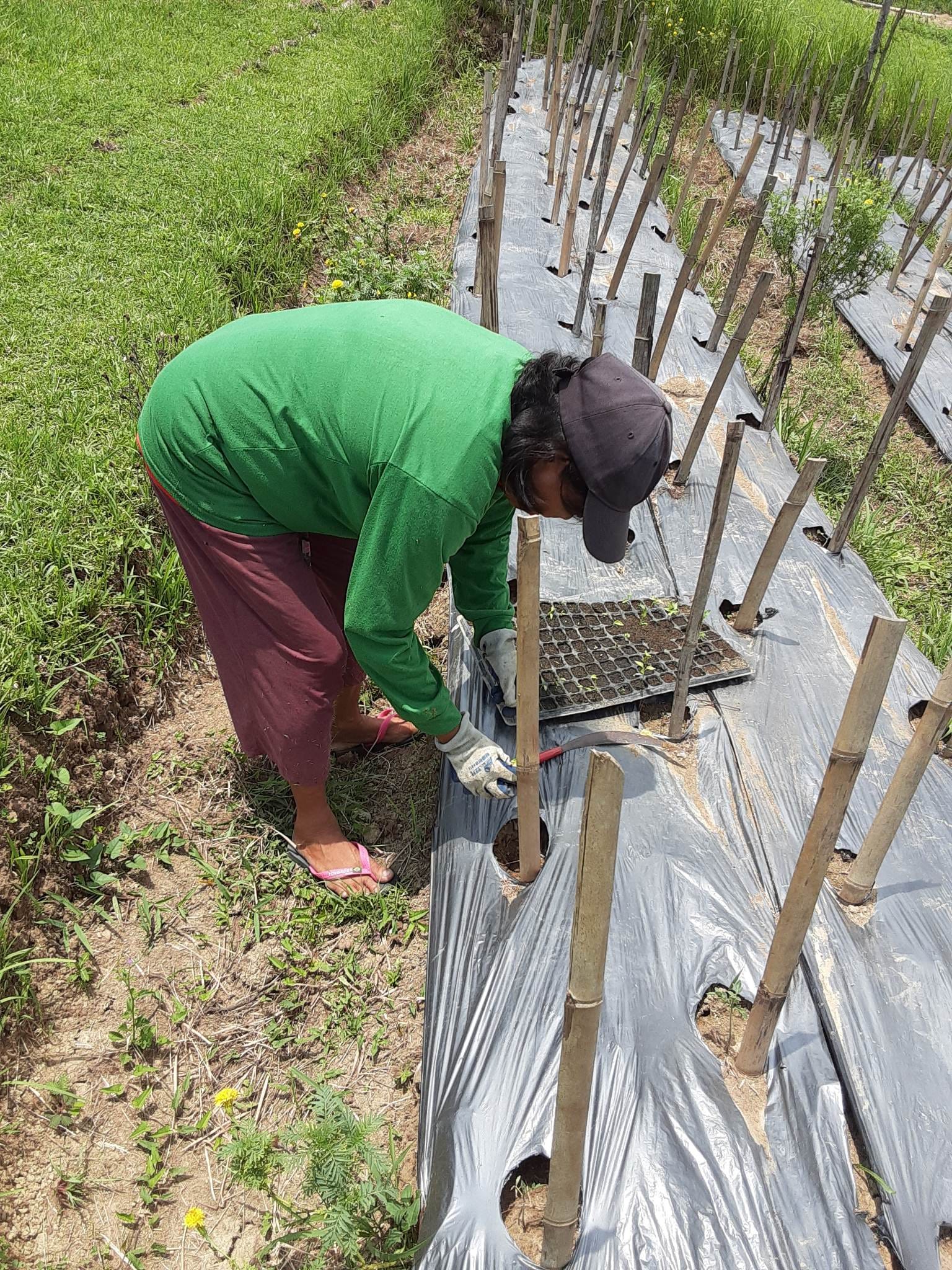
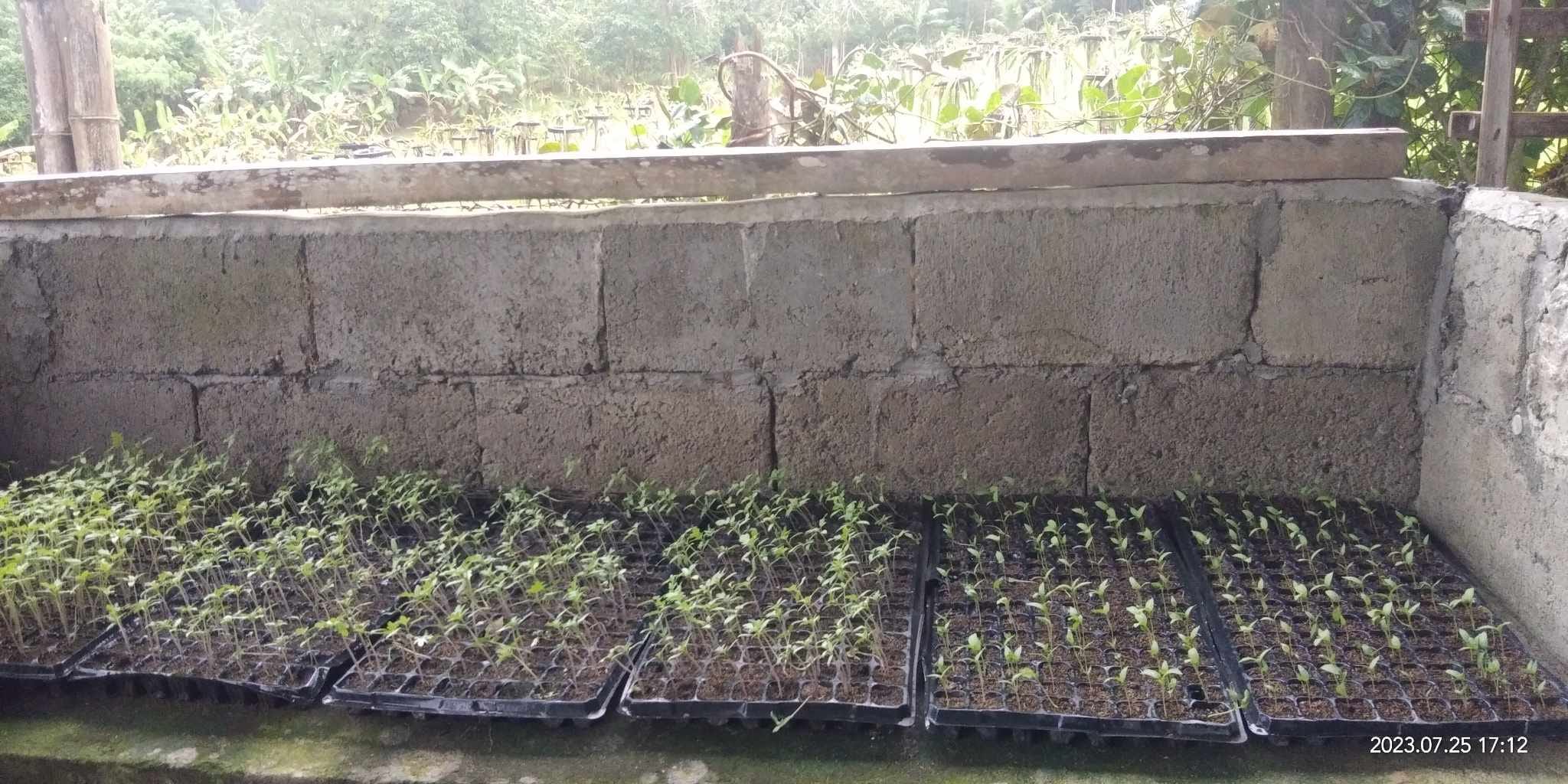
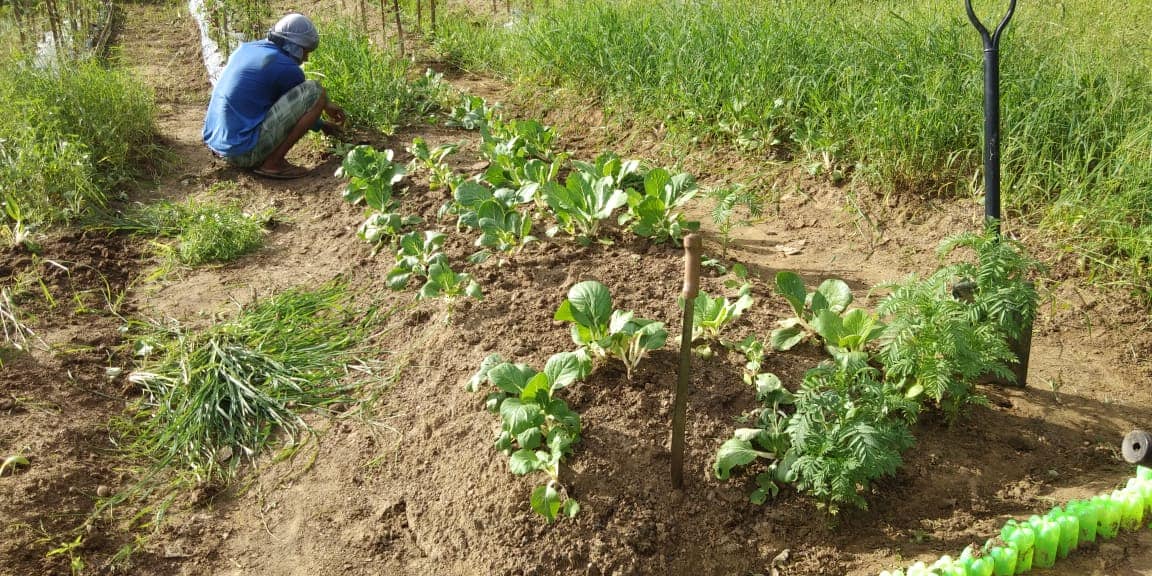
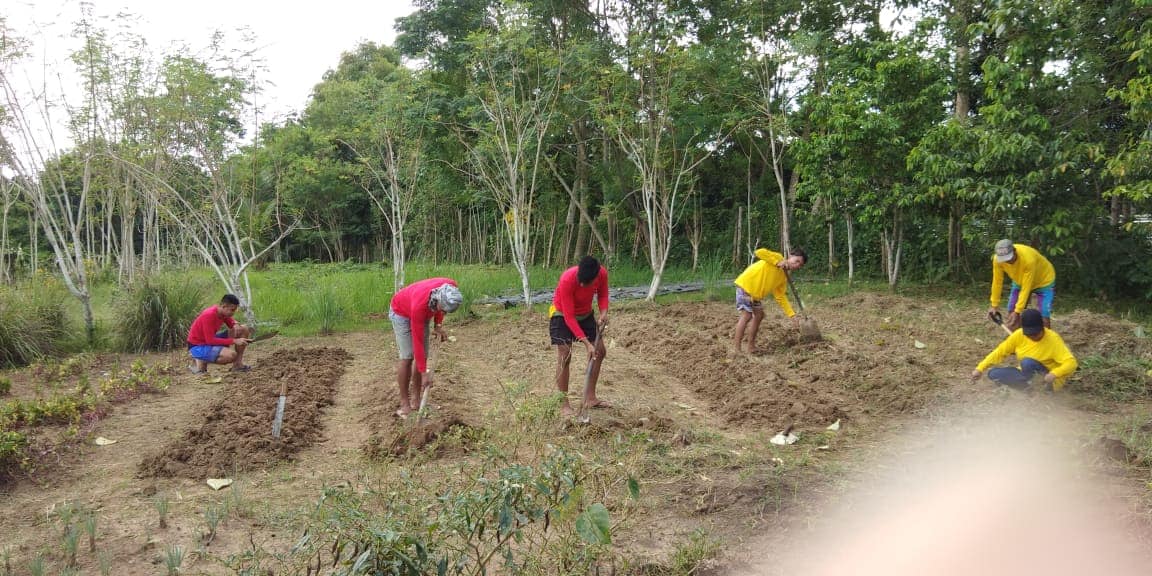
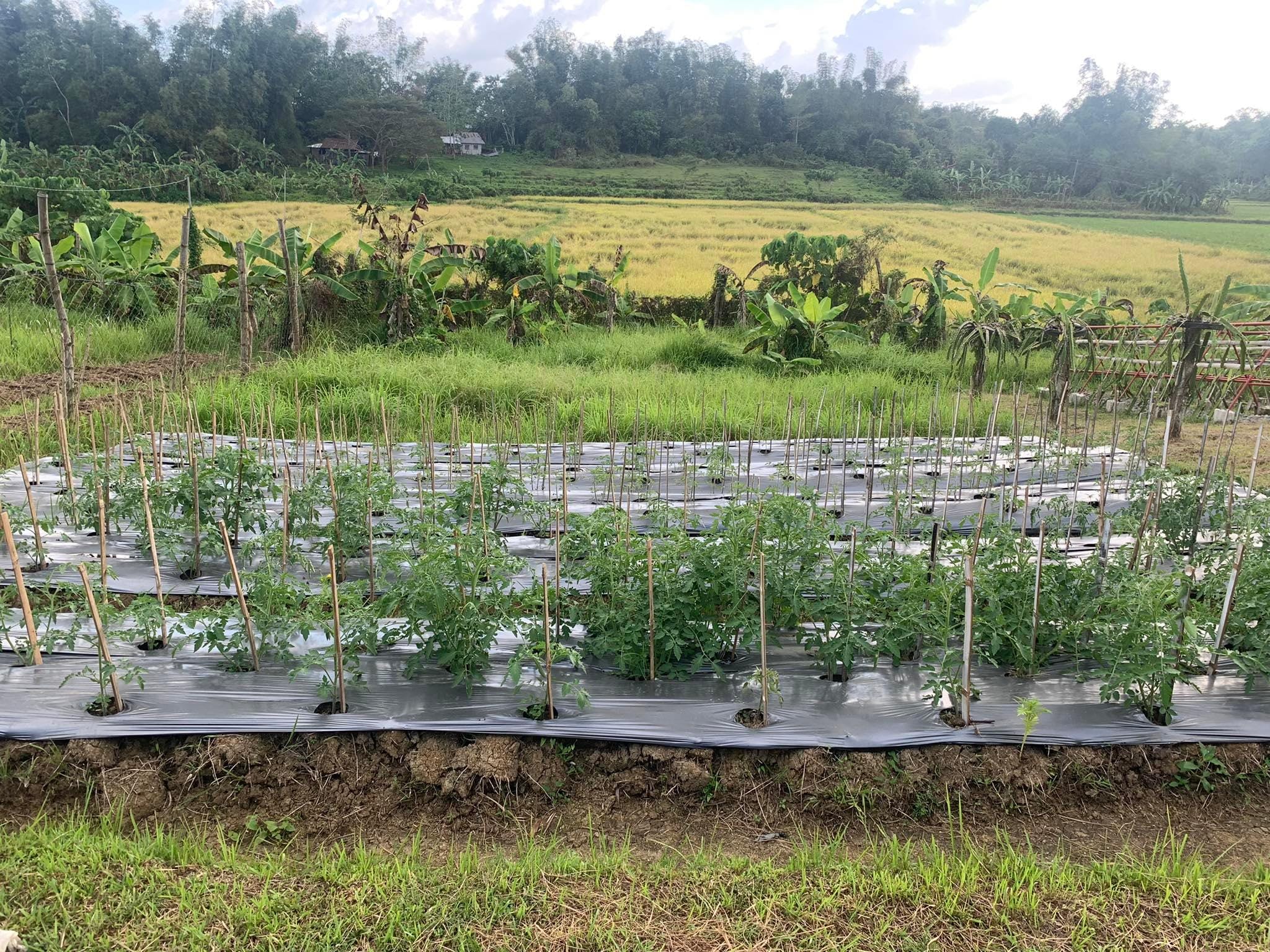
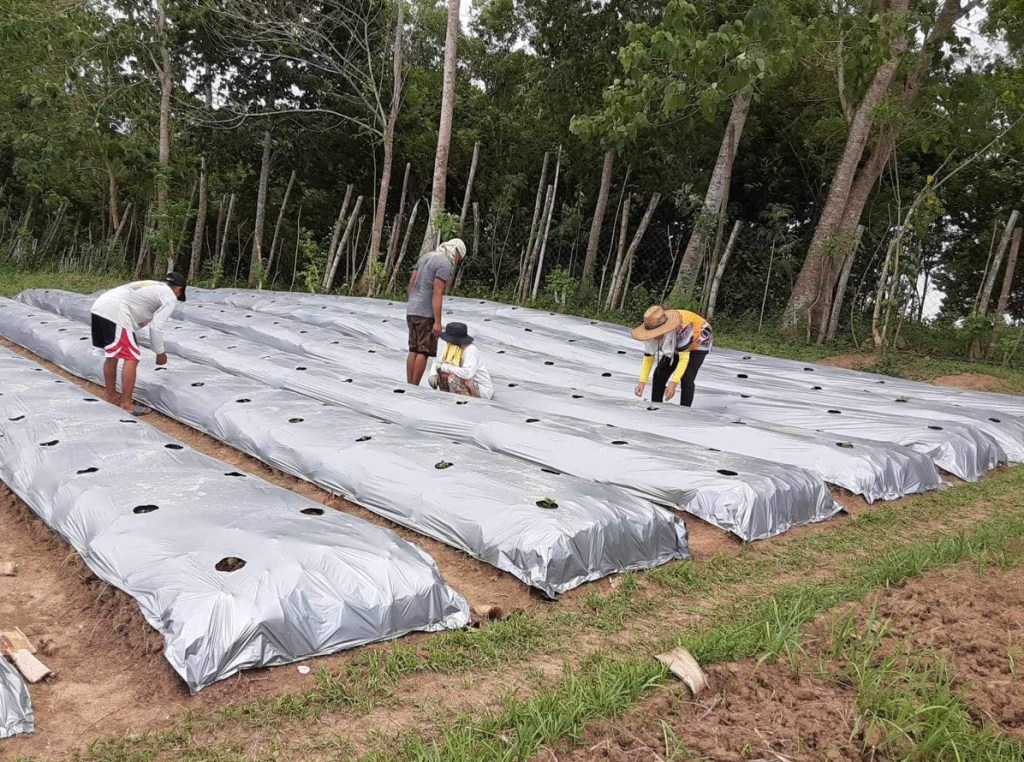
This week, students are now watching the germinated seeds and getting them ready for transplanting in new plots.  Some plots have already been planted, but they are expanding their operations.  There are still some plots that have to be completed with soil testing, soil amendments, and covering with plastic mulch.  The plots where they have run out of plastic mulch, they are covering the plants with shredded  coconut husk mulch to help retain moisture.  The heat index is going up and even if it rains every night, it is still not enough to cool temperatures down during the day.

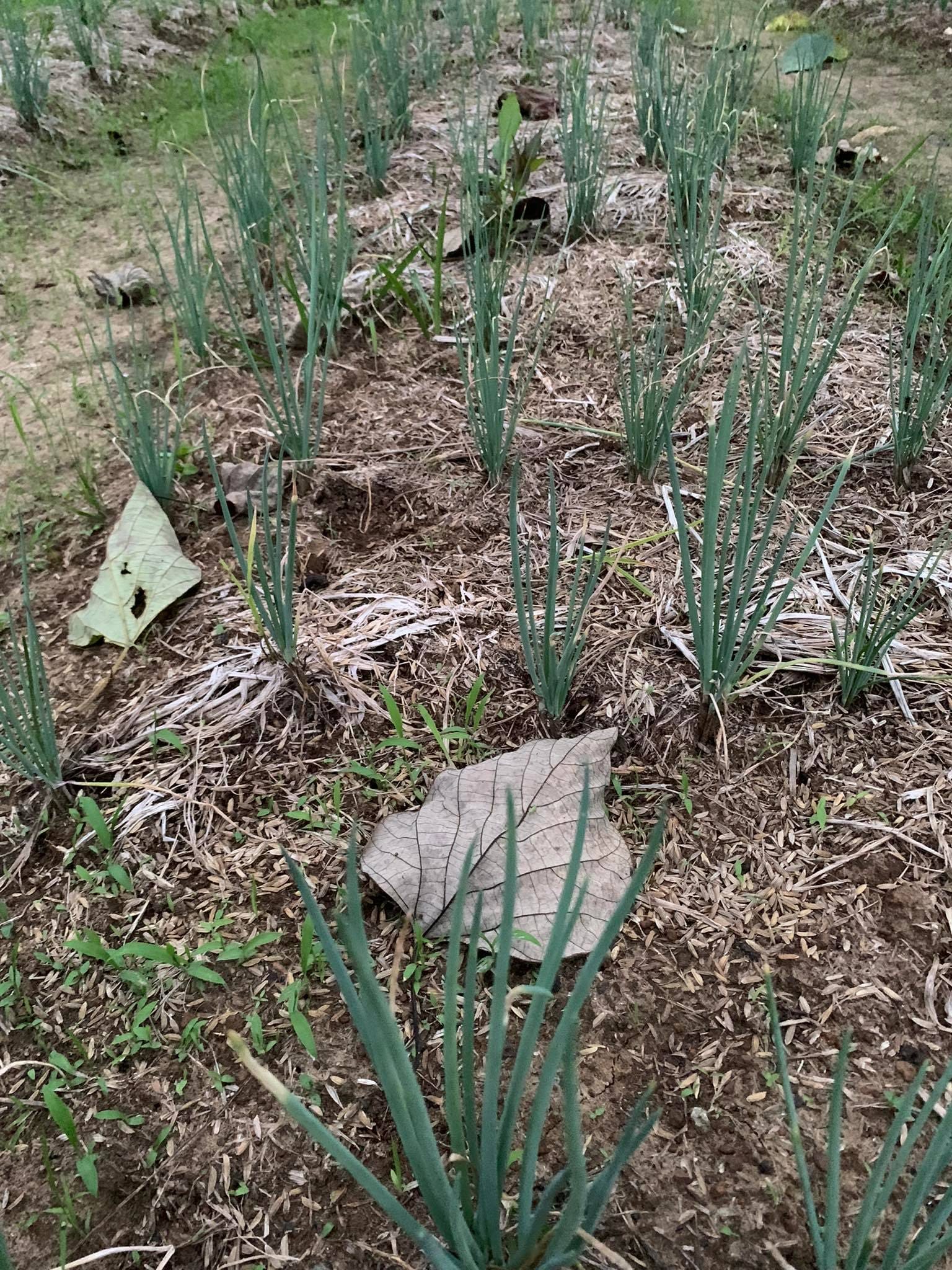
They continue their daily surveillance of their newly planted seedlings, and weeds that had sprouted in the beds, or between the beds, are removed and cleared out. They are now watchful of garden pests, and the worst so far has still been the cutworms.  So they are spraying the plants and surrounding soil with their prepared baking soda pesticide/fungicide. Each individual student is responsible for remixing and replenishing this for use on their garden beds for pest control. The ordered germination trays have not arrived yet.  We had budgeted for 10 trays of 105 holes each, so they could germinate 1050 seeds at one time. 

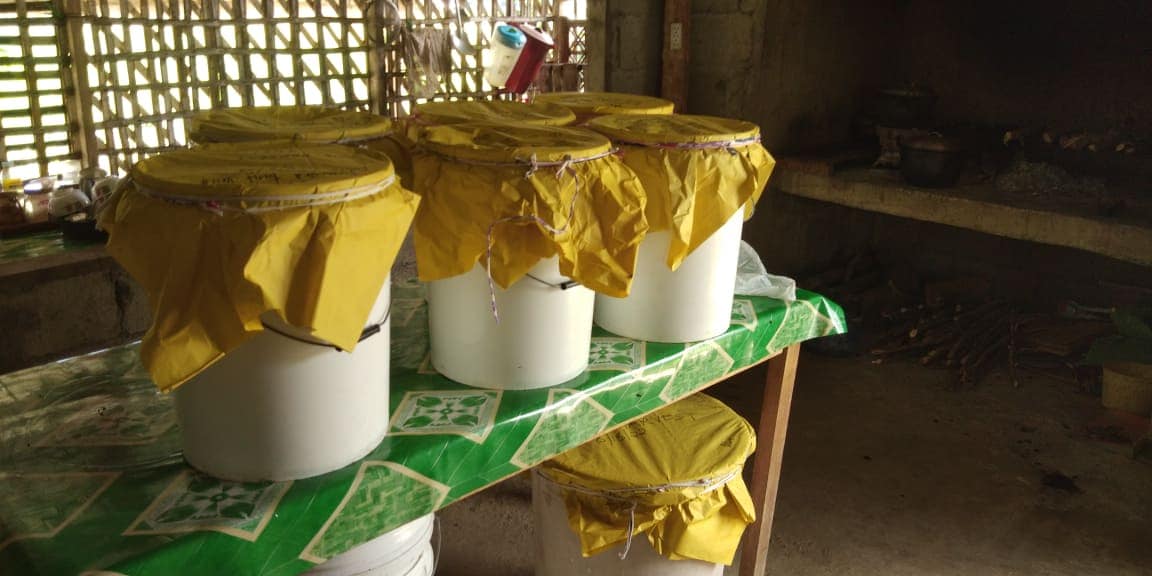
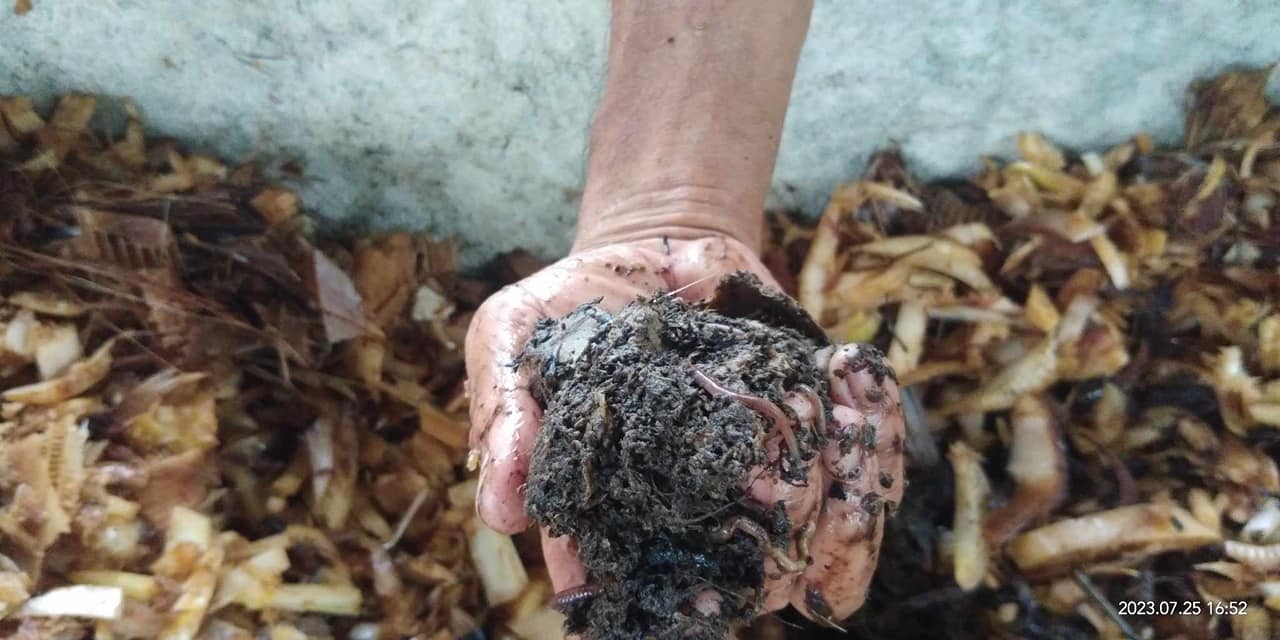
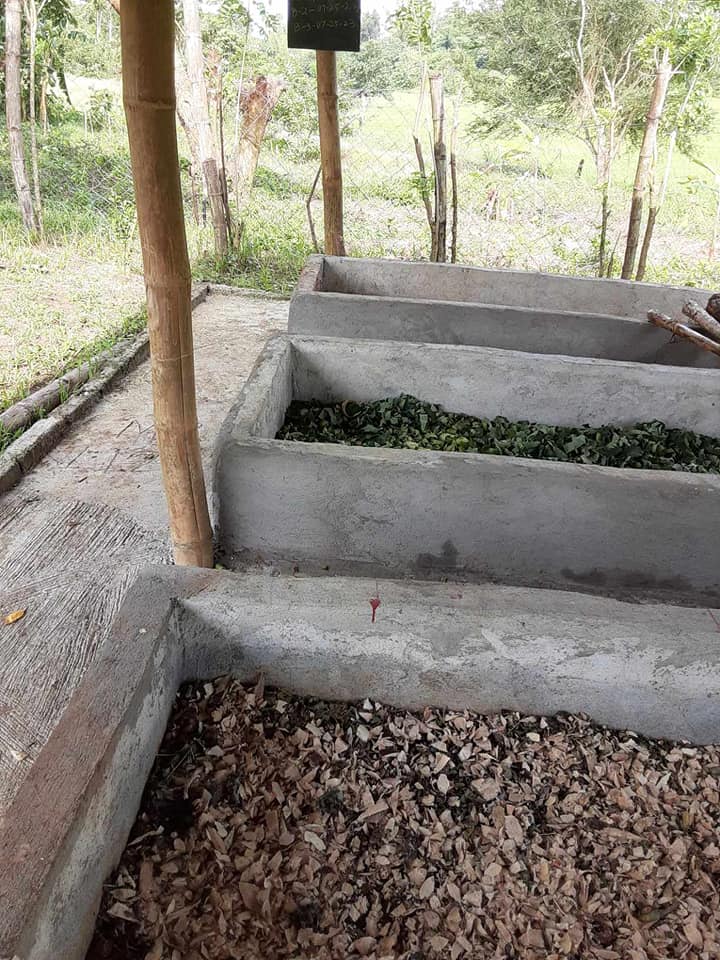
Vermicompost shed.  The students are also in charge of feeding our worms and aerating the substrate daily with a rake.  We have 6 covered beds where we grow our vermicompost.  We have local worms, but also purchased and added the bigger African vermicompost worms.  These worms, aside from eating green and brown leaves, love banana stalks.  But the banana stalks must be shredded daily to keep up with what the worms ingest.  They see vermicompost being produced by the worms, but not enough to harvest yet.

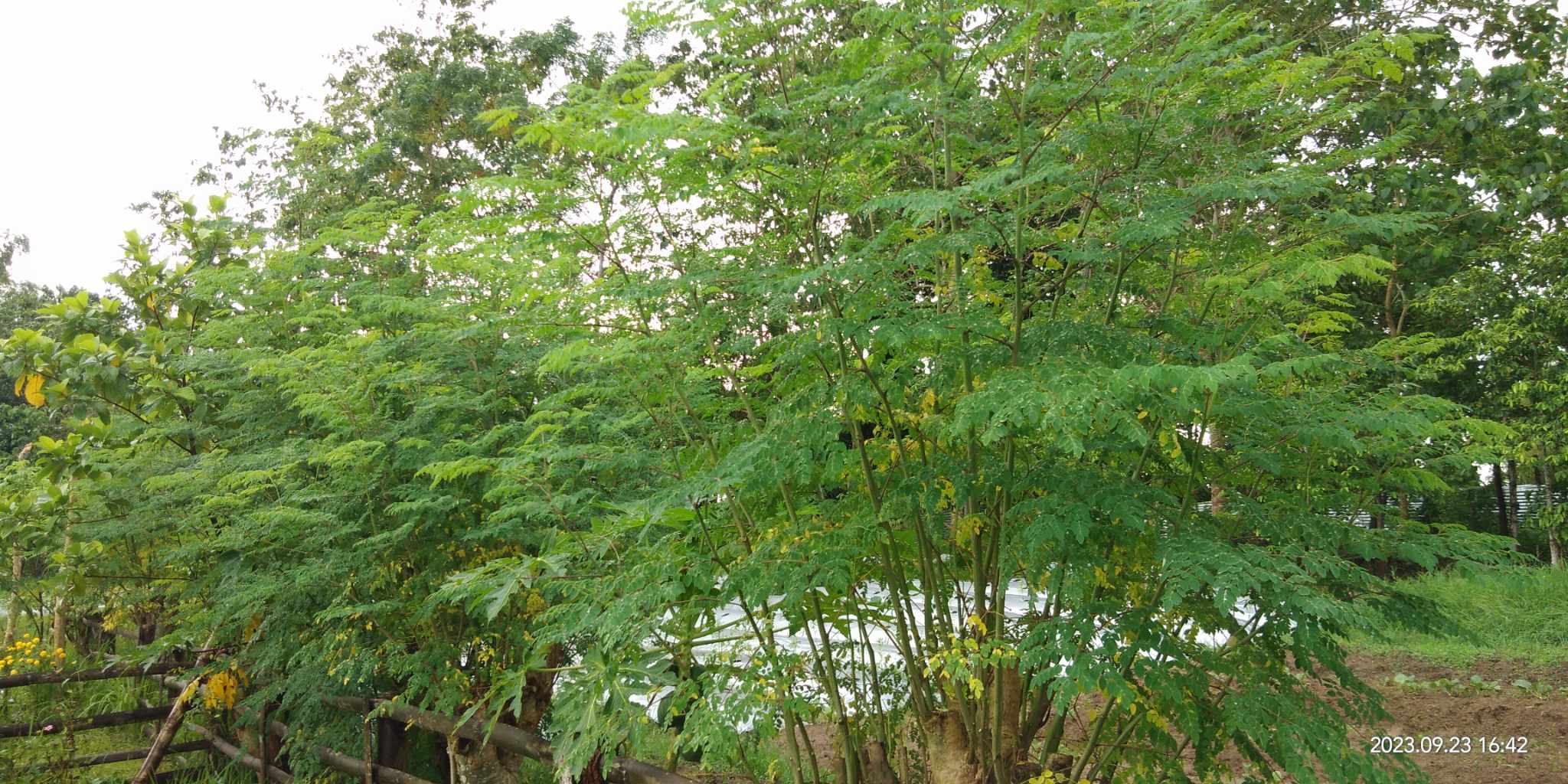
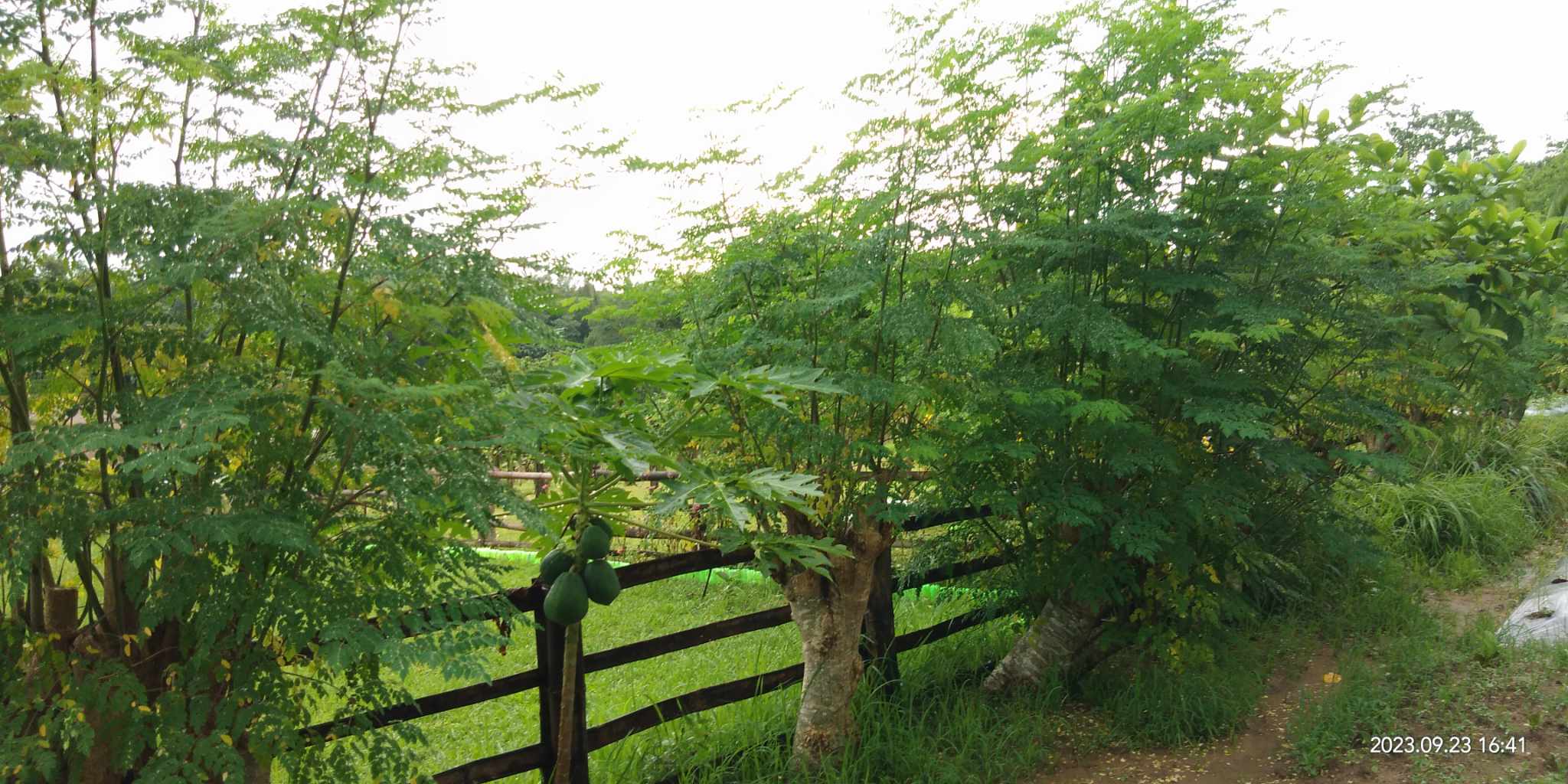
Moringa stems for planting.  The farm has about 500 moringa trees and they are getting taller to where it is harder to reach the leaves for harvesting.  We are trimming them now.  We also have neighbors that come after all the workers have left, climb the fences to “steal” moringa leaves to cook for their supper.  This does not dissuade them from picking other vegetables and fruits on the farm. To discourage this practice, we are “rooting” about 100 stems to give away to neighbors. Maybe if they have their own tree to harvest moringa from, they will stop visiting our farm to get their own supply.  We hope this also controls and dissuades them from picking and harvesting the student’s other planted vegetables.

Pollinator flowers.   They were instructed to plant these in their plots together with the planted vegetables, but alas, this concept is new to them.  I sent them more than 10000 seeds of zinnia, echinacea, marigolds, and we have purchased citronella and lemon grass plants for them to propagate.  But I see no companion / pollinator flowers planted in the plots.  Instead they are planted far away near the lotus ponds where we have little vegetables planted.  We had a long discussion about the fact that these companion and pollinator flowers will not only help dissuade pests from harming their vegetables, but it will also encourage pollinators to come around the flowers and pollinate their vegetables for them.  This practice therefore is not a beautification project, but a necessity.  Flowers are planted to attract pollinators to pollinate their vegetables. The more vegetables they plant, the more pollinator flowering plants they also need. Citronella and lemon grass (tanglad, local name) also helps reduce harmful insects, mosquitoes, flies, and prevent snakes from coming into the planting areas. 

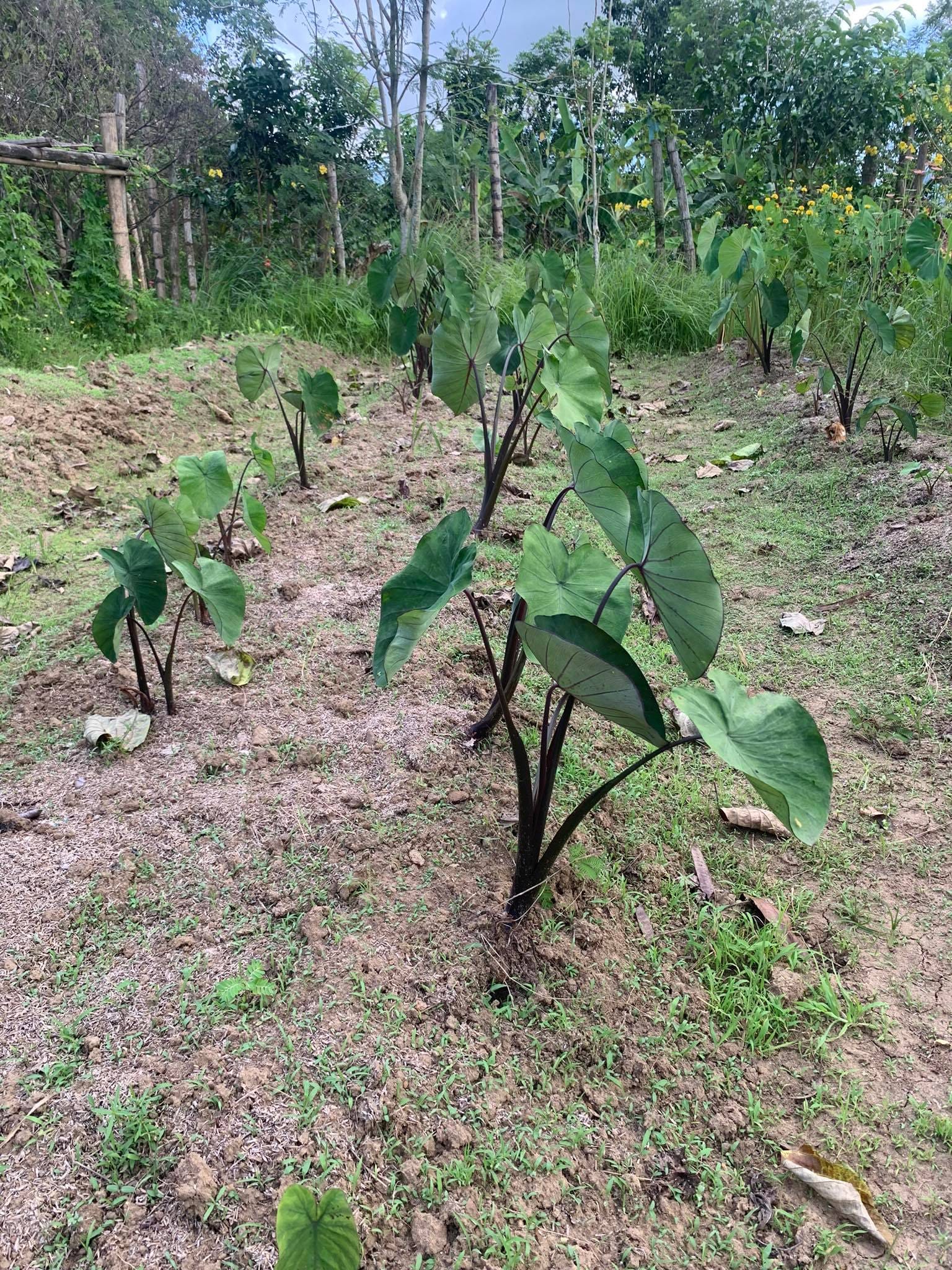
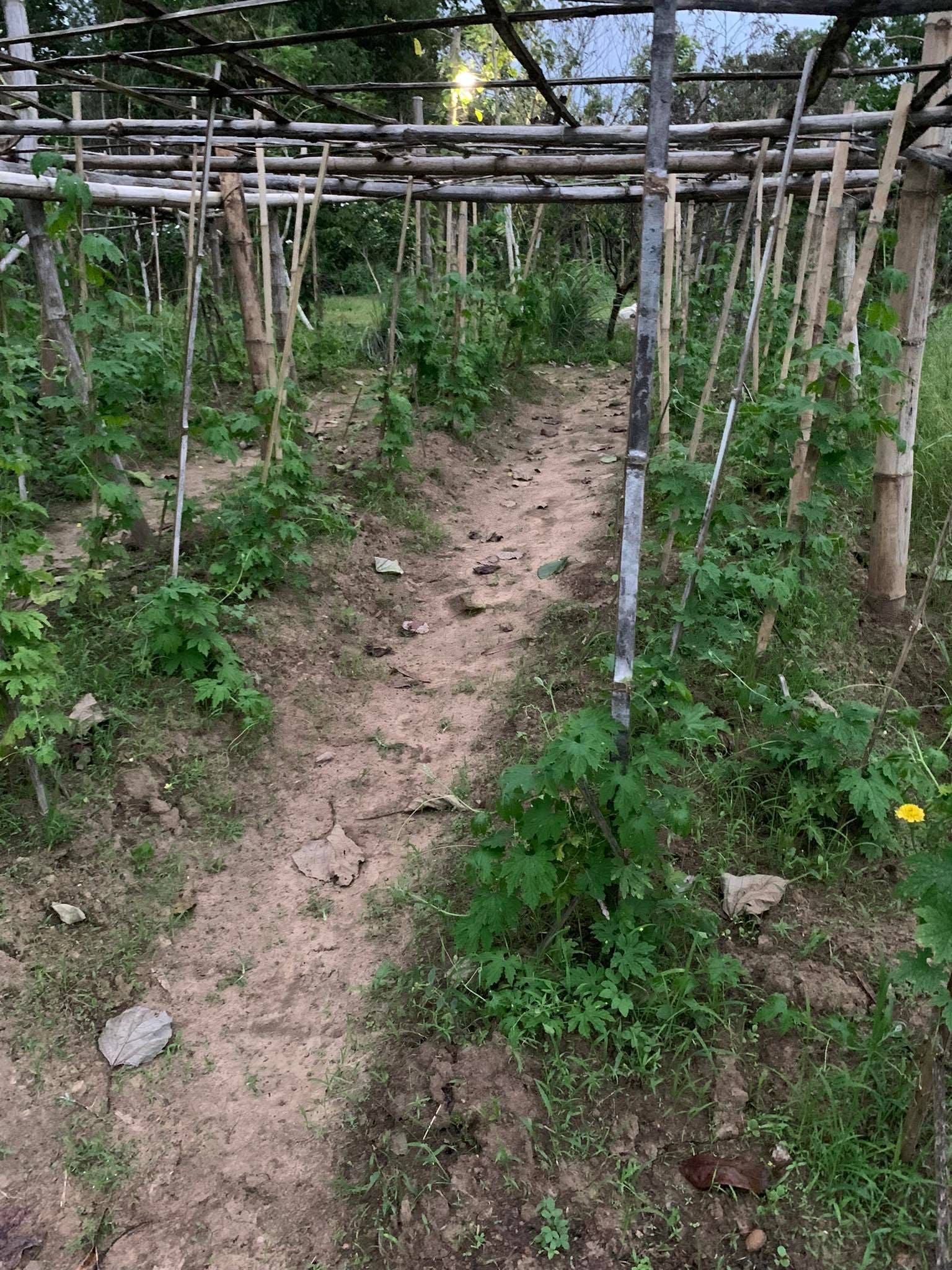
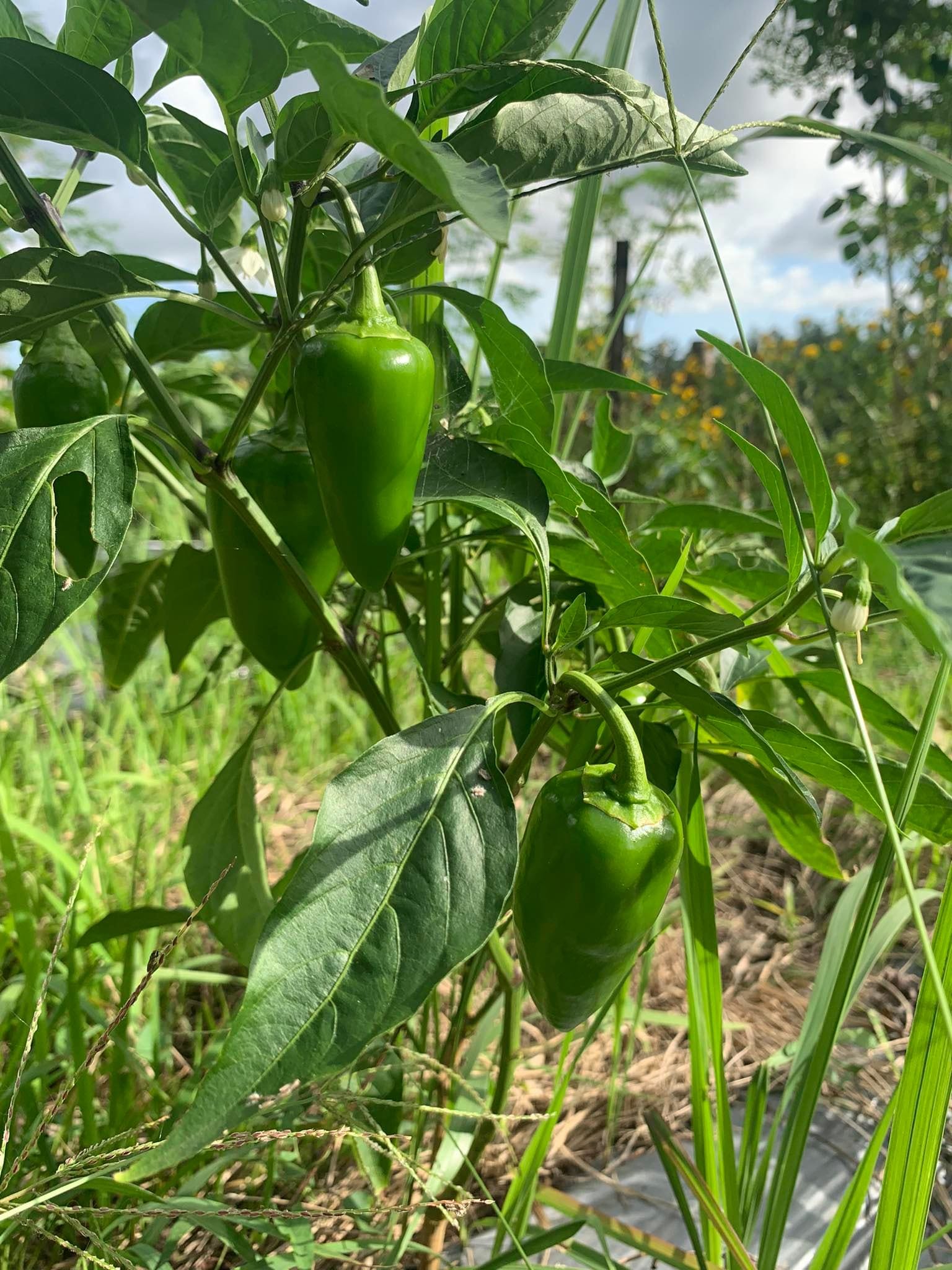
So this week and the coming week, they will continue their activities on the vegetable beds, keep up with more germination, feed and aerate vermicompost beds.  The vine vegetables have also grown taller, and they are putting up trellises for them.  So far, they have planted their fields with the germinated tomatoes, eggplants, okra, peppers.  They also have vine plants like cucumbers, bitter melon, long beans, squash, etc.  They must cut and harvest more bamboo logs from the existing bamboo clumps to use as vine trailers.

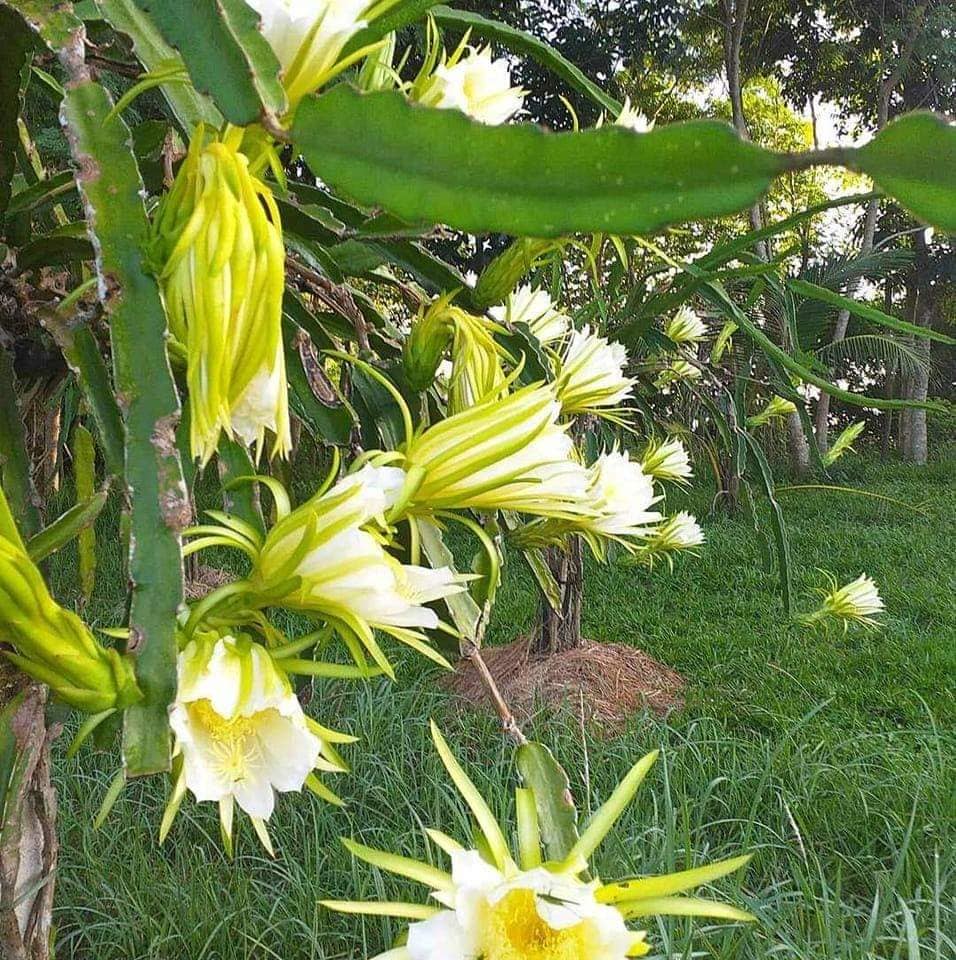
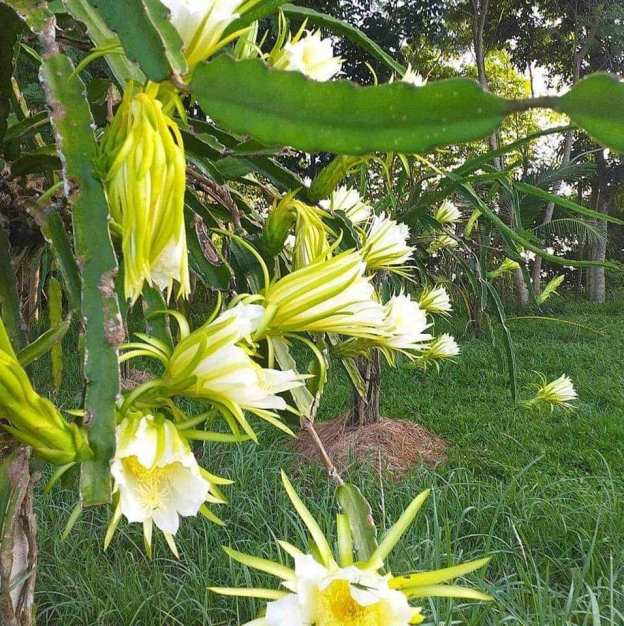
Fungus problems:  our bananas, dragon fruit had been infected with anthracnose and rust fungus.  We had collected plant and soil specimens of the infested areas, but lab results from the DA (Department of Agriculture) is not back yet. We do not want it to spread to the vegetables the students are planting.  These samples were brought to the lab last week but is still not back because of the local holidays. 

They found wild pineapple growing at the other side of the rice field, and some of these were transplanted near the dragon fruit area.  20 cacao and robusta coffee seedlings arrived but we are still waiting for the 4 batuan, 2 lanzones and 4 rambutan trees.  The cacao and coffee trees need to be planted in shade, so they will be accompanied by a banana sapling planted beside each one of them.  We use the saplings that are already available in the farm.  Planting trees and herbs is included in students list.  They will be done, after the frenzy of germinating, planting, in their plots is done, and their fields are looking more stable.

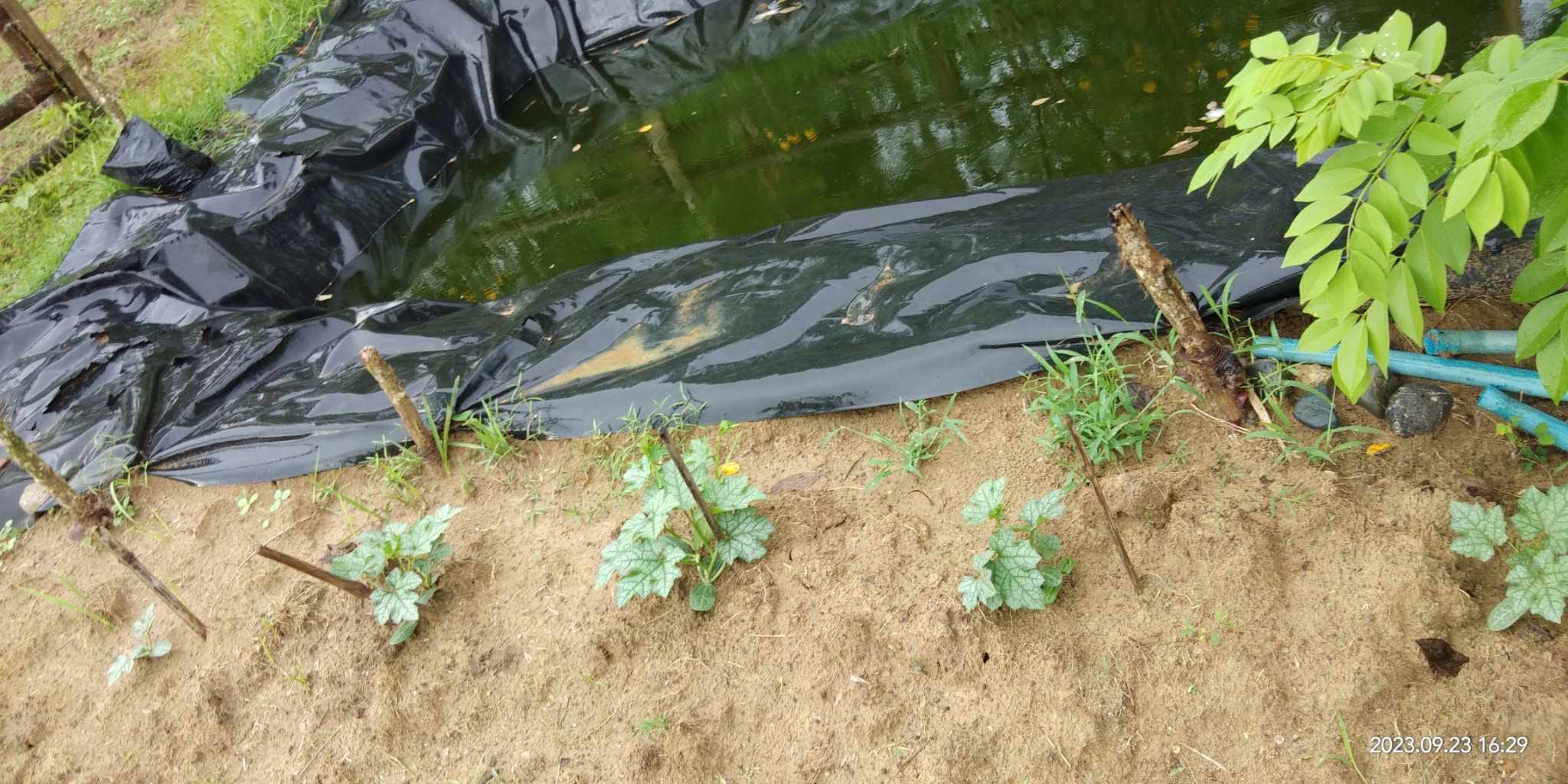
Water Reservoir Areas.  Pond #1 is healthy and is planted with lotus.  Water is clear, we have 2 tilapia that together with frogs, lizards and dragonflies have controlled the area of flies, mosquitoes, and pests.  Pond #2 is the newer pond.  One of the workers accidentally used this to soak rice seedlings, and it turned green with algae.  They had tried to empty it of water and clean the plastic sides, but alas, it kept raining every night, so it keeps filling up with more algae green colored water.  A suggestion last week was to add 2 tablespoons of chlorox compound, but alas they poured the entire bottle into it.  The following day, 3 small dead frogs were floating on top. The chlorine was too harsh and killed them.  So now, they are emptying this pond of water again, scraping the walls of algae, and filling it up with fresh clean water.   This is the second water reservoir pond that is used to water the vegetables planted on top of the hill.   They now realize that the best solution to this is not chemical, but organic and natural. Plant lotus inside the pond in pots, and the lotus roots will not only clarify the muddy water, but also control algae.  Add tilapia fish as they will also control and feed on the algae on the sides of the ponds.  This is being considered currently.

Our Lotus Pond #1 has lotus growing in it, and 2 tilapia fish which were 2-inch fish when we caught them from the nearby creek last year.  The water in this pond is very clear.  The fish had grown to about 8 inches long, but they want them to stay in the pond as they also control mosquito larvae.  The area is endemic for dengue currently, and we are trying to control our standing water to avoid mosquito growth and population.  Lotus pond #1 is at the shed which is used as the student’s open-air classroom.  There are hardly any mosquitoes and flies around the area.  

I attended a pollinator conference at the Euchee Butterfly Farm in Bixby, Oklahoma Wednesday and Thursday this week. I learned about growing pollinator field stations to attract butterflies and bees, learned about the flowers they feed on, learned about harvesting seeds from native plants that will help bring pollinators to the area.  I also looked at their model of butterfly farming and found that building a butterfly farm where we could produce habitats for pollinators is very viable and will also help in the pollination of not only TSEP, but all the farms in the vicinity

So far, we have learned that:  without viable soil, we have no plants, without good water, we cannot feed our plants, but without pollinators, our plants cannot produce fruit and give us a bountiful harvest.   

This is the first time that this has been taught to students and farmers in the area.  I have learned about how to do this in Oklahoma this week, and now will use that knowledge and information to develop our pollinator areas in the farm.  The students are scratching their heads, as this is their first time to hear that flowers planted near their vegetables will help attract the pollinators that will make their vegetables produce more fruit.  They thought they would only plant vegetables, and now they needed to plant flowers also.

Their schedule is still the same, early morning to a break between 12-2pm when the sun is at its zenith and is hottest since the Philippines is by the equator. But right now, instead of coming just 5 days a week, they are voluntarily coming 7 days a week.  They are now also coming on the week-ends as they are afraid their plots could be destroyed and their work disrupted.   It does rain at night and they are afraid their fields will be eroded.  But because of the additional 2 days, we worry about their food budget as all 14 of them eat for only $20 a day, but they are able to supplement this with mung beans, vegetables like fresh moringa, lettuce, green papaya and bananas they could find in the farm. We had just provided them with 2 big sacks of rice that we hope will suffice until the end of their training.  They cook their own lunch and have a short siesta after until 2 pm. 

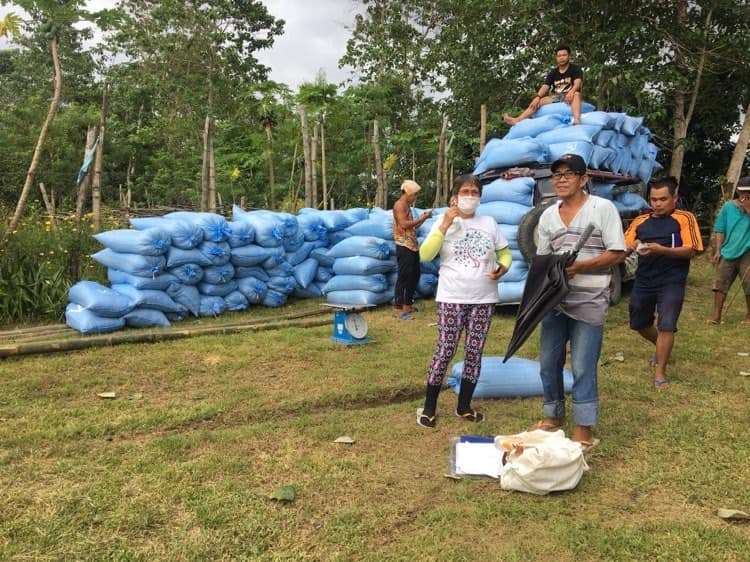
Last week, the students observed a rice harvest from the farmers in the adjoining rice field (also part of TSEP farm), and while working in their own vegetable plots, they also enjoyed the extra excitement of observing and enjoying the food that usually feeds all the workers. Harvest day is always a special day of thanksgiving. It is mini-fiesta time, and the intensive labor of the harvesters are always rewarded by good food. 

One thing that was realized from the rice harvest is that about one hectare to the southeast is infested with rats.  Control of rats is through owls, hawks and snakes on the ground.  We still have our 2 owls flying above, but they need more help from under the bush in order to control the rat population.  Hence, we will be moving some garden snakes to that area. if we find them. We do not have poisonous snakes or cobras in the area. 

We also attracted visitors from the local elementary school, where we had some pupils coming by to observe and enjoy the farm.  One of them is the daughter of one of our students.  They will become future farmers also. 

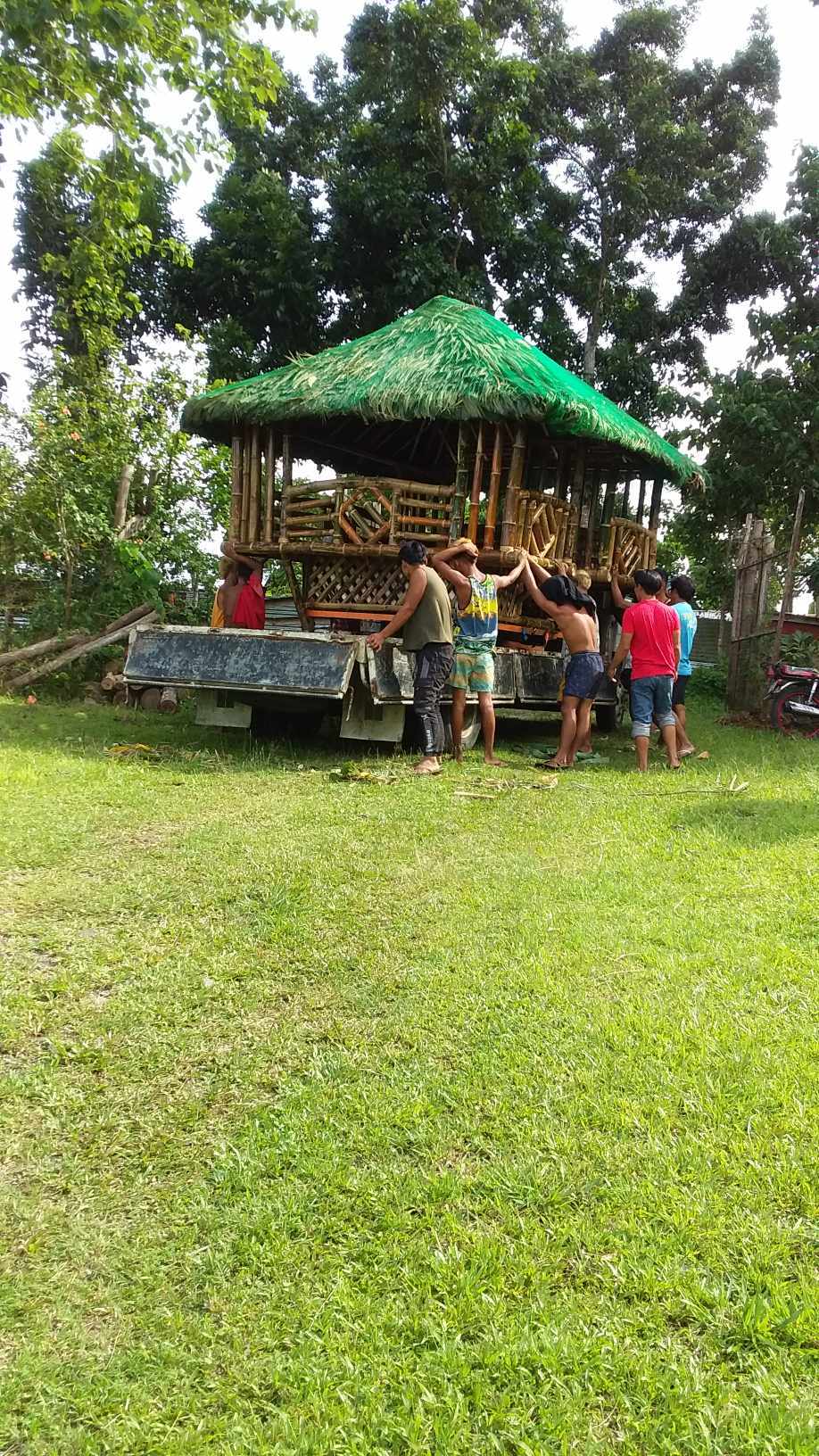
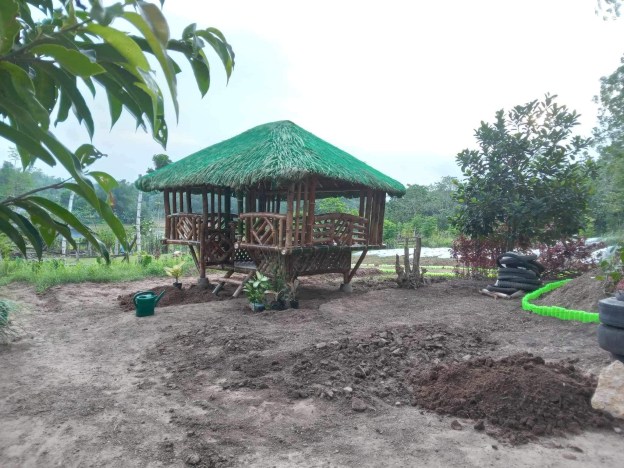
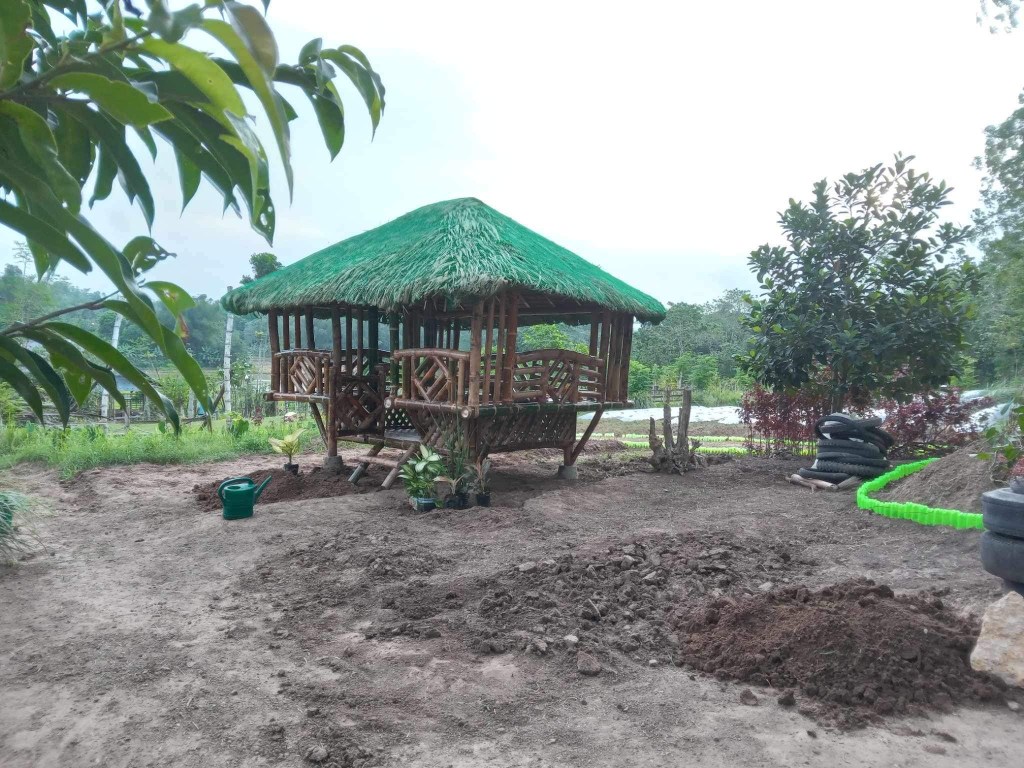
Pictures to follow.  Among the pictures, you will see one of about 15 men lifting a small nipa hut from the truck, carrying it to its permanent position at the entrance of the farm last week.  This practice is called “bayanihan”, meaning community teamwork, the term for an old Filipino practice nationwide especially in small rural communities.  This nipa hut will be where the student’s customers will come to have their self-harvested vegetables/produce weighed and sold. This has added a buoyant feeling of joy and increased energy as well as motivation for these students to look forward to, because they know their produce will attract customers to come, and that they will have some added income.  The beautification of this area has since also become their pride and joy. 

Grateful for the funding support of Westminster.  Your ministry has just made a difference on the lives of these students, their families, and the whole community of Sitio Bitin, Janipaan-Oeste in New Lucena. It also puts the whole city of New Lucena on the agricultural training map of the whole island of Panay.   Because of this, the mayor has informed us that it has allotted P4 million pesos budget to go to the cementing of the dirt road that leads to the farm and environs. Although this will not happen until next year, we are very happy about this good news. 

This is our report for Week 5 of the Mabuhay Agritech Training Program in Iloilo, Philippines as sponsored by Westminster.

Sincerely yours,

Sgd.  Zonia Velasco

Mabuhay Project and Mission Director
Fourth Week – Mabuhay Agritech Project in Iloilo, Philippines

Fourth Week Report on the Mabuhay Agritech Mission Project in Iloilo, Philippines

September 18, 2023

To:          Mike Stanley, Missions Committee, Westminster Presbyterian Church

From:    Zonia Velasco, Mabuhay Fellowship, Mabuhay Agritech Mission in Iloilo, Philippines

Activity continues with the students completing the rest of their plots, testing the soil, amending the soil and covering with plastic mulch.  The germinated seedlings have been transferred to some of the plots that are ready, and daily surveillance of the newly planted seedling are done.  Individual sprayers to contain exactly 1 liter of their prepared baking soda pesticide/fungicide so that each individual student will be responsible for mixing and replenishing its contents for use on their garden beds to control pests, etc.  We are also in the process of purchasing more germination trays.  We have budgeted for 10 trays of 105 holes each.  This will enable them to germinate 1050 seeds at one time. 

They continue to also take care of their vermicompost sheds, chopping pieces of banana stalks daily as they see that the worms are eating them faster now.  They see this each time they aerate the vermicompost. They have more worms doing the job for them now.  Yet, they have not made enough vermicompost to harvest yet.

In addition to their work of preparing and planting their vegetable plots, they are also preparing the soil around the “bahay kubo”(small bamboo hut) where they will plant their pollinator flowers, and citronella.  This to attract more pollinators into the farm. The citronella is to help reduce mosquito and flies, and prevent snakes from coming into the planting areas. 

So this week and the coming week, their activity will still be on the vegetable beds, keeping up with more germination, vermicompost beds – feeding and aerating.  Their plan is to plant their fields with the germinated tomatoes, eggplants, okra, peppers.  They have added vine plants to their chosen vegetables.  They chose cucumbers, bitter melon, long beans, squash, etc.  They have just received new seeds from the US which I had sent – on pickling cucumbers, and bigger sized tomatoes.  We will see if these will adapt to the tropical climate.  They have also cut more bamboo logs from the farm bamboo clumps to use as vine trailers.

We have a few problems with fungus, and an inspector from the DA (Department of Agriculture) who visited the farm, wanted us to bring plant and soil samples to the provincial capital laboratory to find out the type of fungus, so they could recommend treatment.  The bananas and dragon fruit have been attacked by the fungus, and we do not want it to spread to the vegetables the students are planting.  These samples were brought to the lab last week, and it will take them at least 10 days to give us the results.   

We have also acquired 10 new cacao seedlings, which they will be planting in the future to fulfill their requirement for planting trees.  We are in the process of buying and procuring more tree seedlings for future planting requirements, We have ordered 4 batuan, 2 lanzones, and 4 rambutan trees.  We are also sourcing some coffee robusta seedlings, and more cacao trees may still be coming also.  But to plant cacao and coffee, we also have to plant more banana trees with them to give them shade as they are peculiar about needing a shady or a mottled shady area.  We will be planting more banana trees with them also.

This week was also busy with them expanding their vegetable area, hence extending fenced areas, and cleaning the area of brush and wild vines.  They are also rooting moringa branches which they had pruned from the mother plants.  Goal is to plant as many as 100 new moringa trees and give some of the rooted branches to households nearby for their own gardens. 

Pond #2 is being emptied of water this week, as it had turned green because of algae.  Their goal is to empty it first, then scraping the walls of this algae, but the continuous daily rain has hampered their efforts. This pond contains gathered rainwater and is used to water their gardens in the elevated areas which is far from the well at the bottom of the hill.  We have pumps, but it does not reach that far. Suggestions to clarify the water included input of chlorine and other chemical pond clarifiers, but so far the best suggestion is still organic. Plant lotus inside, and the lotus roots will clarify the muddy water, and control algae.  Also add tilapia fish as they will feed on the algae on the sides of the ponds.  This is still being considered currently. Our Lotus Pond #1 has lotus growing in it, and 2 tilapia fish which were 2 inch fish when we caught them from the nearby creek last year.  The water in this pond is very clear.  The fish has grown to about 8 inches, but they want them to stay in the pond as they also control mosquito larvae.  The area is endemic for dengue currently, and we are trying to control our standing water to avoid mosquito growth and population.  The lotus pond is also attracting dragonflies, frogs and other lizards that control our flying insect population.  Result is, there is hardly any mosquitoes and flies around the area.   

I will be attending a conference on butterfly farming in Oklahoma this week, and we will use that knowledge and information to develop our pollinator areas in the farm.  The students are scratching their heads, as this is their first time to hear that flowers planted near their vegetables will help attract the pollinators that will make their vegetables be more productive.  They thought they will only plant vegetables, and now flowers also?

Their schedule is still the same, early morning to a break between 12-2 when the sun is at its zenith and is hottest since we are almost by the equator. They cook their own lunch and have a short siesta immediately after.  They cook their own food, and we have just provided them with 2 sacks of rice that will hopefully last until the end of their training.

This is our report for Week 4 of the Mabuhay Agritech Training Program in Iloilo, Philippines as sponsored by Westminster.

Sincerely yours,

Sgd.  Zonia Velasco

Mabuhay Project and Mission Director

Third Week – Mabuhay Agritech Project in Iloilo, Philippines

Third Week Report on the Mabuhay Agritech Mission Project in Iloilo, Philippines

September 10, 2023

To:          Mike Stanley, Missions Committee, Westminster Presbyterian Church

From:    Zonia Velasco, Mabuhay Fellowship, Mabuhay Agritech Mission in Iloilo, Philippines

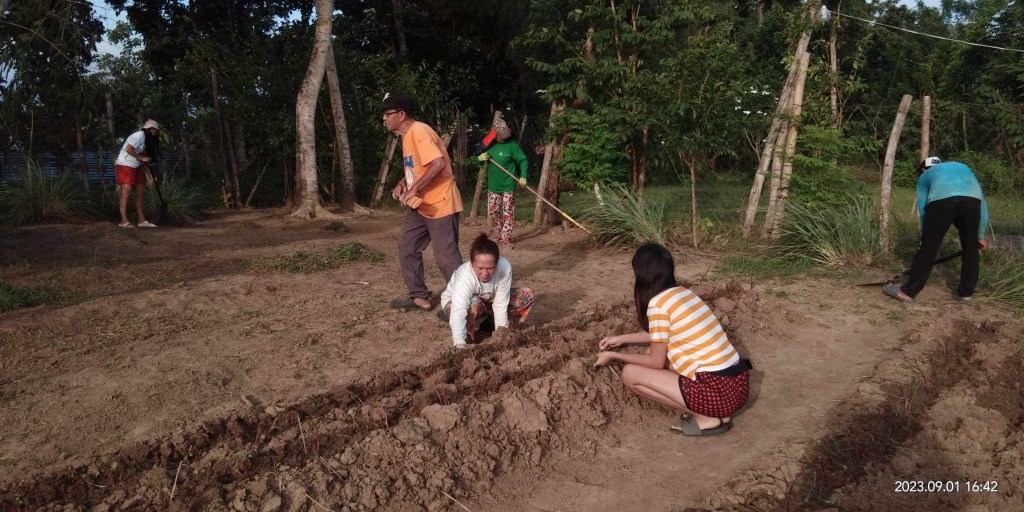
Because of the past typhoon and school enrollments which disrupted their Agritech class schedules, the students have requested if they can come on weekends, Saturday, and Sunday to continue their work in their farm gardens.  The reason they give for this is that they must build up the plots that had been damaged by the rains, are preparing more beds for their germinated seeds that need to be transplanted soon. They are also covering their prepared beds with mulch and are checking daily that the rain gthat mostly comes at night now, is not washing out their plots.  Some of the seedlings are already ready to transplant, and they had already planted some. They are challenged by cutworms and other pests that are eating or “cutting” the tips of their newly transplanted plants.

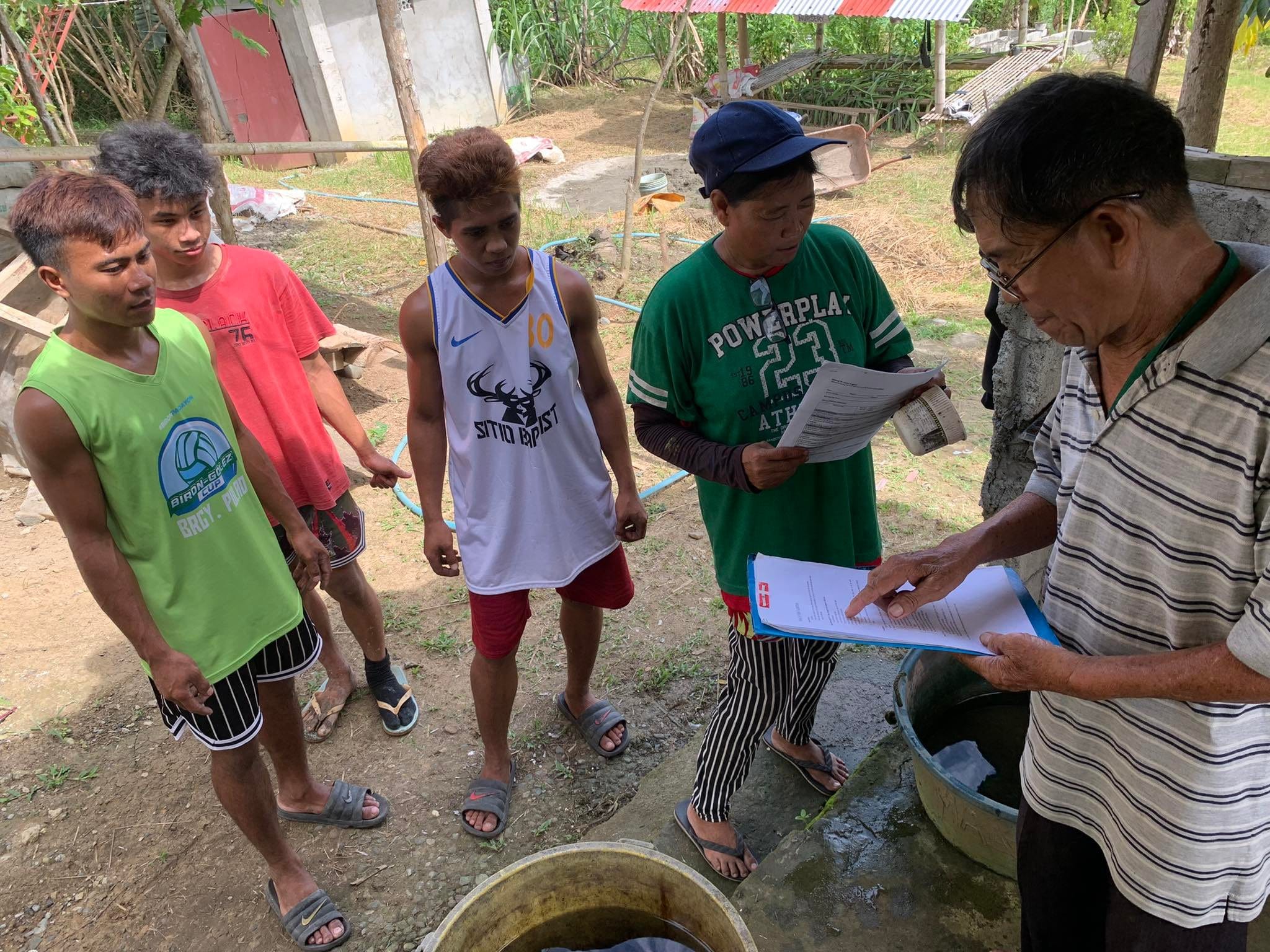
They had lectures on soil, soil preparation and soil testing.  They are making sure that the acidity and alkalinity is controlled, and that the clayish soil is being augmented by sand, carbonized rice hull and vermicompost to correct their composition before covering them with mulch.  They forgot to plant their companion flowers in their plots and their vegetables are being attacked mainly by cutworms.  So aside from germinating their companion flowers and plants, they have been making their baking soda pesticide/fungicide sprays to use.  Sprayers have been purchased and provided to each of the 14 students.  Their recipe is: 1 liter water, 2 tablespoons baking soda, 1 tsp liquid soap, 2 tablespoons cooking oil – shake together and spray on the plant and surrounding soil. As preventive, they may use this 2x a month but they may use 3x a week with a bad infestation.  It will take care of not only cutworms, but also slugs, aphids, mildew, slugs, whiteflies, thrips, caterpillars, spider mites, roaches, and ants. When the mixture is consumed by insects it releases carbon dioxide into their system and kills them. The vegetable oil suffocates them and repels fungal spores. It keeps leaves fresh and clean. It sweetens the taste of tomatoes.  However they are cautioned that it can adjust the soil ph into alkaline, so they have to be wary about using them too much.

This week, aside from reformatting their plots, they put mulch on top, made holes in the mulch where they will plant their vegetables.  At the same time, they are germinating companion plants with their tomato, eggplant, okra seeds, and they used up $200 of their funds to buy more quality seeds. 

They continue to also take care of their vermicompost sheds, chopping pieces of banana stalks daily as they see that the worms are eating them faster now.  They see this each time they aerate the vermicompost. They have more worms doing the job for them now. 

They are also making sure their lotus ponds are full of water.  We call them lotus ponds now, but they are 4’x4’x 3’ deep holes lined with plastic which serves as our water reservoir on the top areas of the fields.  There is no other water source but a deep well at the bottom of the hill, and it is very laborious to bring water in pails up the hill. We planted lotus in these small ponds to attract dragonflies, frogs, and garden lizards to help control mosquitoes and other flying insects around.  The lotus has now caused the water in the pond to clarify.   We also added some tilapia fish to take care of mosquito larvae since dengue (carried by host mosquitoes) had been endemic in the area. 

They are also preparing the soil around the “bahay kubo”(small bamboo hut) where they will plant their pollinator flowers, and citronella.  Why citronella? To prevent snakes from making their nests under the “bahay kubo”.  Citronella is a known snake-buster. It can also be cooked with coconut or olive oil and made into citronella oil and used as a gentle body oil against mosquitoes.

So this week and the coming week, their activity will be on the vegetable beds, keeping up with more germination, vermicompost beds – feeding and aerating.  Their plan is to plant their fields with the germinated tomatoes, eggplants, okra, peppers.  They chose tomatoes as they found out it already costs P150 in the market, and they are already looking forward to a good harvest and income in three months time.  They are also planting vine plants like bitter melon, cucumber, long beans, squash and when these grow taller, they will make a “balag” vine trellis for them with bamboo which they also could source from the farm. .

Part of their project is planting trees. In the following month, they will also plant a field of cacao, coffee, and coconuts and we have already ordered if not buying these saplings for them to plant.  Herbs are also part of their project, so we will have blue ternate, basil, citronella, rosemary, tanglad, etc.

They are all very thankful for this opportunity to do what they are doing now.  More lectures on pests, fungi and control, on how to make organic concoctions to provide increased nitrogen, calphos, neem oil, and madre de cacao concoctions which they can make cheaply and effectively from trees and plants available in the farm. 

Their schedule is still the same, early morning to a break between 12-2 when the sun is at its zenith and is hottest since we are almost by the equator. They cook their own lunch and have a short siesta immediately after.  We are still giving them P1000 a day for food, and they are able to make do with this budget, augmenting the food with what vegetables they could gather around the farm.  With this budget, they have a snack at mid-morning, mid-afternoon, and a cooked lunch with rice.

They are a happy lot, with smiles on their faces, a spring on their steps.   They are learning a way of living that will benefit them for the rest of their lives.

This is our report for Week 3 of the Mabuhay Agritech Training Program in Iloilo, Philippines as sponsored by Westminster.

Sincerely yours,

Sgd.  Zonia Velasco

Mabuhay Project and Mission Director
Second Week – Mabuhay Agritech Project in Iloilo, Philippines

Second Week Report on the Mabuhay Agritech Mission Project in Iloilo, Philippines

September 3, 2023

To:          Mike Stanley, Missions Committee, Westminster Presbyterian Church

From:    Zonia Velasco, Mabuhay Fellowship, Mabuhay Agritech Mission in Iloilo, Philippines

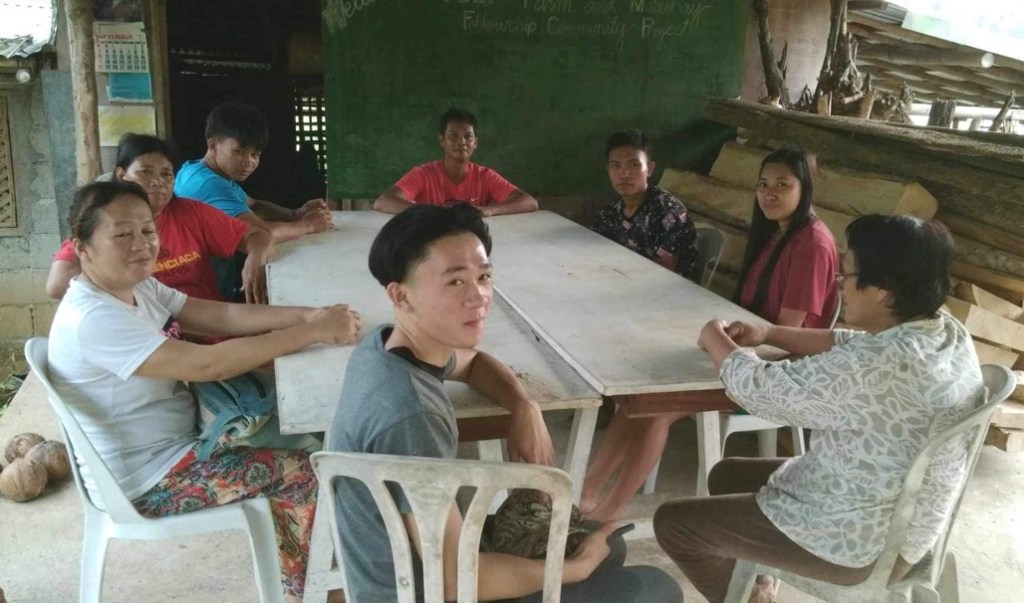
We have now completed 14 participants for our enrollment.  Another person was added this week.  They have automatically grouped themselves into two groups.  We have a 12 year old, and we questioned that he was the youngest, and we had second thoughts about making him part of the program, but his family insisted stating that his uncle and 3 cousins were part of the program and that he will be grouped with his family.  If he does not join, he will come home from school to an empty house with no food. They promised that they will watch out for him, and not work him too hard, give him more rest breaks and make sure he does not get a heatstroke.  He was also given a pre-test and was able to pass.

Typhoon Goring had landfall in Iloilo, last week, and brought strong winds, rain and flooding.  The students did not attend Monday and Tuesday because of this, but they voluntarily made up the time, and kept coming back to the fields on their own to check as they were afraid the rains eroded their plots.  They are also working Saturday and Sunday because they realized that the seeds they germinated are now  all ready to be transplanted, and they are also watchful as something was eating the tips of their tomato plants. 

They will be attending classes from 8am to 6 pm, with a rest period of 2 hours between 12-2pm for lunch and siesta, and they will have breaks in the morning and afternoon for snacks also.   Lectures are given in the morning.  They had their first lecture on soil, which they needed so they could test their soil acidity and fertility, correct it before they covered it with plastic mulch. The funds allowed us to purchase wide plastic mulches and they readily applied it to the plots that were already ready. 

Plot preparation was the hardest as they had to deal with clayish soil, add their additives, mix and retest for correct acidity/alkalinity.   They use coco-peat (they make these themselves from dried out coconuts), carbonized rice hull, river sand, and some charcoal, with vermicompost.  They also take care of the vermicast bin, and make sure the worms don’t die but keep liking and eating what they are being fed.

Formal training has started.  Because of the typhoon, the lectures have been delayed and adjusted as the students need to work on their plots to take advantage of the weather and rain.  They are trying their best to keep their plots up, and not be washed away by the rain.

We have ordered cacao and coffee plant seedlings for each of them to plant in the farm.  Both cacao and coffee have to be planted in shade, so they are also planting banana trees to provide fast shade.  There are two water reservoir ponds of 4x 4 feet at 3 feet in depth, and one has been planted with lotus.  The lotus roots has purified the water. The other pond has turned green from algae, and while they are trying to empty it and use up its water so they could scrub the walls of the pond, the rain came again and filled it up.  So for now, they have a lot of water they could use daily on each of their plots.

We had also ordered a small “bahay kubo”, a small one room bamboo house with a thatched roof that is 7’ x 11’.  It came yesterday, and the students were so excited, that they immediately cleaned the ground around the small house so they could plant flowers around that area.  They did not stop until they were done.  That area will become our “pollinator” plots.  They will also plant citronella herbs around the nipa hut to deter snakes and rodents.

This is our report for the second week. Pictures to follow.

Very truly yours,

Sgd.  Zonia Velasco

Mabuhay Project and Mission Director 
First Week – Mabuhay Agritech Project in Iloilo, Philippines

First Week Report on the Mabuhay Agritech Mission Project in Iloilo, Philippines

August 26, 2023

To:          Mike Stanley, Missions Committee, Westminster Presbyterian Church

From:    Zonia Velasco, Mabuhay Fellowship, Mabuhay Agritech Mission in Iloilo, Philippines

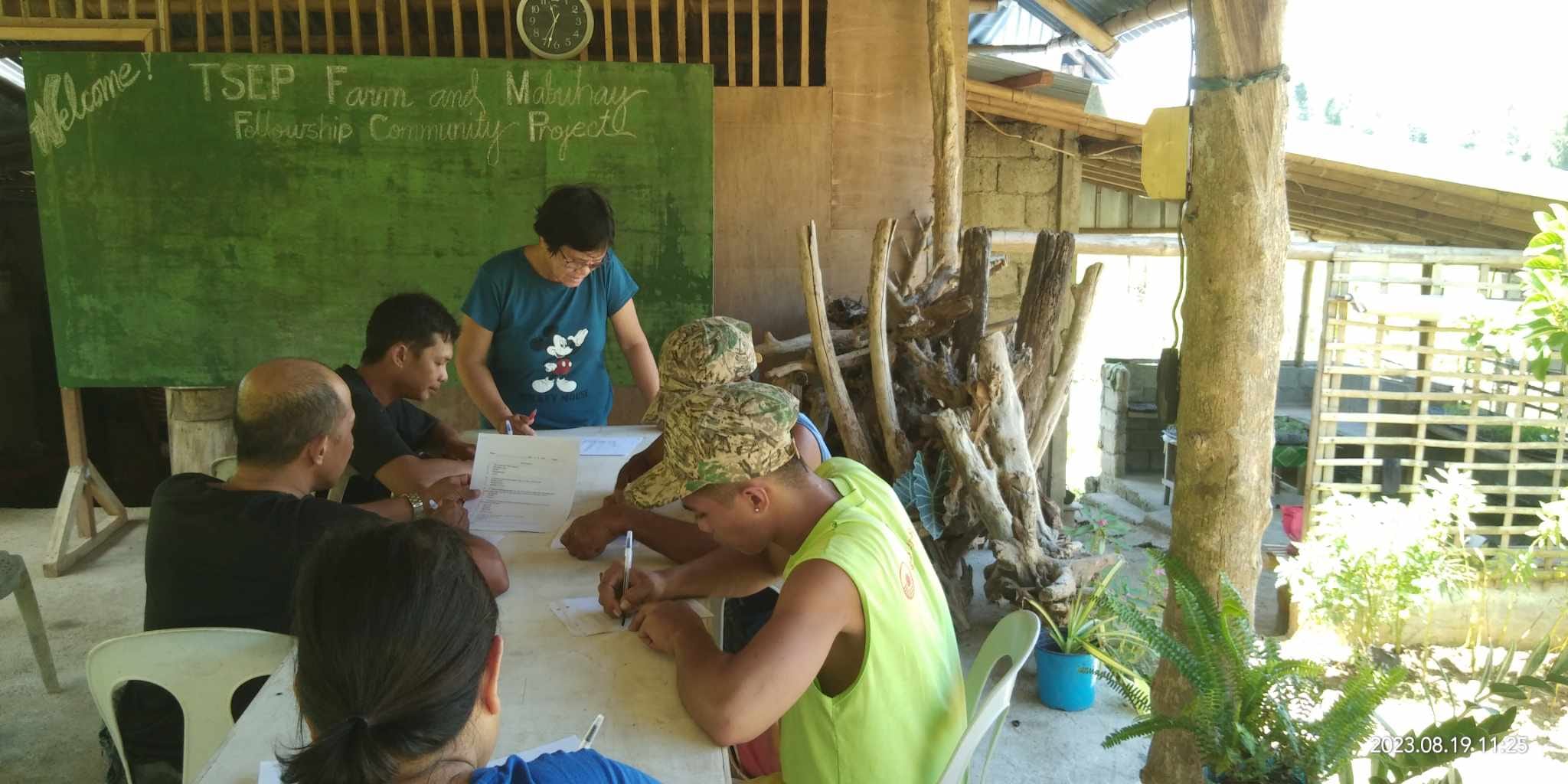
Enrollment for the program started on Friday, August 18, 2023.  We had 13 participants present.

Orientation, overview of the program and a pre-test was given to assess farming knowledge to ascertain their strengths and weaknesses, so that the program could address these areas of deficiency in the future. The age ranges are from 15 to 42 years, and educational levels are from graduating high school for the older trainees, and still undergoing high school for the youngest one.  Those who are attending school will have make up classes after school hours and receive personal tutelage to catch up. Lectures will be in printed form also and given to the students.  They will also be provided with notebooks and pens.  

They will be attending 6 days a week from 8am to 6 pm, with a rest period of 2 hours between 12-2pm for lunch and siesta, and they will have breaks in the morning and afternoon for snacks also.   The 12-2 rest period is necessary as it is very hot during midday, with temperatures going up to the high 30’s and low 40’s with high humidity.  The program will provide their food, and they will be cooking their own lunch daily.  Rice and water will be provided onsite, and other market and grocery items like fish and meat for cooking will be bought daily.  Some vegetables are already available on the farm and ready for them to pick and use. There is no refrigeration in the farm, and the farm is too far from their homes and stores for them to go home to have lunch.  This is also an indigent group with none to minimal family income.  There is most probably also no food at home.  Their 6 days a week is voluntary on their part as once they start planting, they must tend to their plots daily, and they are assured of a meal for that day.

Formal training will start on Monday, August 28, 2023, to allow the students to enroll in their schools this week.  It is school enrollment time in the Philippines right now.  

The weekly schedule of training will be lectures in the morning for the first 2 weeks, and field work in the afternoon.  They will be assigned vegetable plots and will have to grow three kinds of vegetables: those that grow above ground, root crops, vine crops.  They will also plant companion flowers and herbs to help control insect and pests in the farm like marigolds, citronella, tanglad, etc. They will be divided into teams and each team will plant at least 12 fruit trees. They will learn about the soil, how to test it for acidity or alkalinity, amend them to make their soil productive.  They will learn how to make cocopeat and charcoaled rice hull to add to their soil amendments.  They will learn composting, vermicomposting and learn how to tend to the vermicompost production in the farm.  They will also learn about organic and inorganic fertilizers.  They will make their own natural fertilizers, natural pesticides, from trees and other materials available on the farm.  They will make their own neem and madre de cacao sprays to use in the farm as needed. They will be able to identify and treat pests and fungi. They will learn basic grafting and marcotting techniques.   They will learn permaculture as the farm is sloping downhill in many areas.  They will learn how to make and dig their own water reservoir areas as a water source for watering their plants in areas that are uphill and too far from the well.  They will also plant pollinator plots of flowers, and dig a lotus pond to host dragonflies, salamanders and frogs that will help get rid of pests.   

They will do all of these in only 12 weeks (three months), and they should be able to graduate in mid-November.  Harvest should coincide with their graduation, as it takes vegetables 3 months from planting to fruiting and harvest.  They will be tested and retested within the 12 weeks, and their overall productivity will be assessed by graduation.  We will give cash awards for the best group.  Our funds will be used to supply materials, tools, pails, sprayers, pots, jars and containers for fermentation and storage of their organic plant fertilizers and pesticides, additional germination sheds, tarps, seeds, seedlings, and saplings for their project, trainers, etc.  Upon graduation, they will be able to start their own gardens in their own home gardens, to provide food for their own families, for the community, or sell them to the market providing additional income to their family.

Our funds had been forwarded as follows:

August 22, 2023 Wire transfer through Wells Fargo:  $3,262.00

August 24, 2023  through Remitly: $300.00

August 26, 2023  through Remitly: $1,500.00

Total:  $5,062.00  (extra $62 from a Mabuhay member donation)

Thank you for the support,

Sgd.  Zonia Velasco

Mabuhay Project and Mission Director