Author Archives: mabuhaydallas

Eight Week Report – Mabuhay Agritech Ministry Project, Iloilo, Philippines

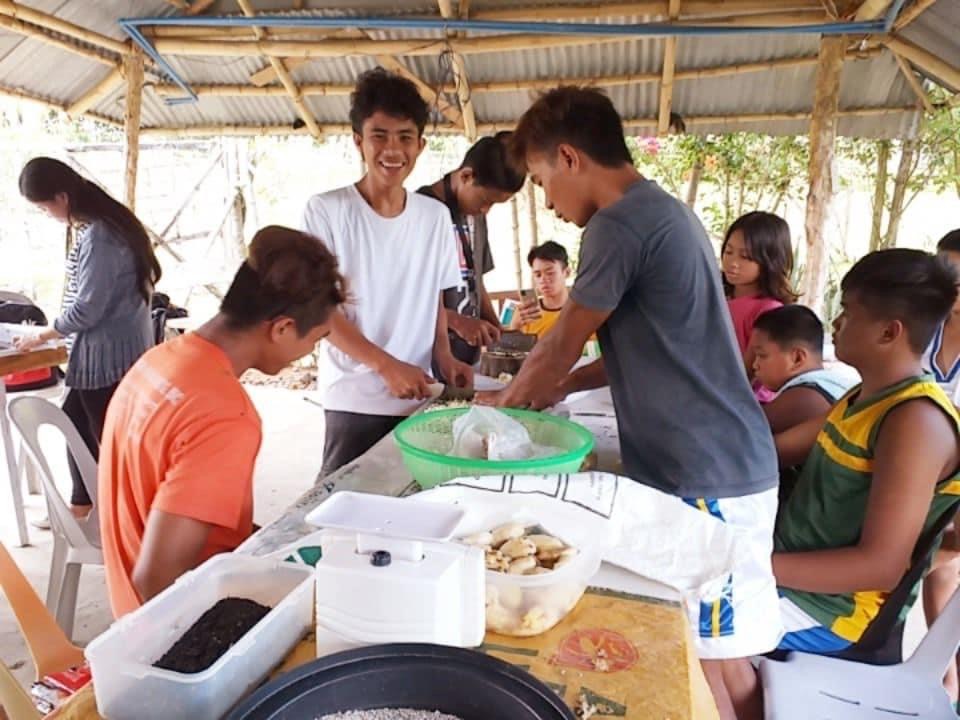
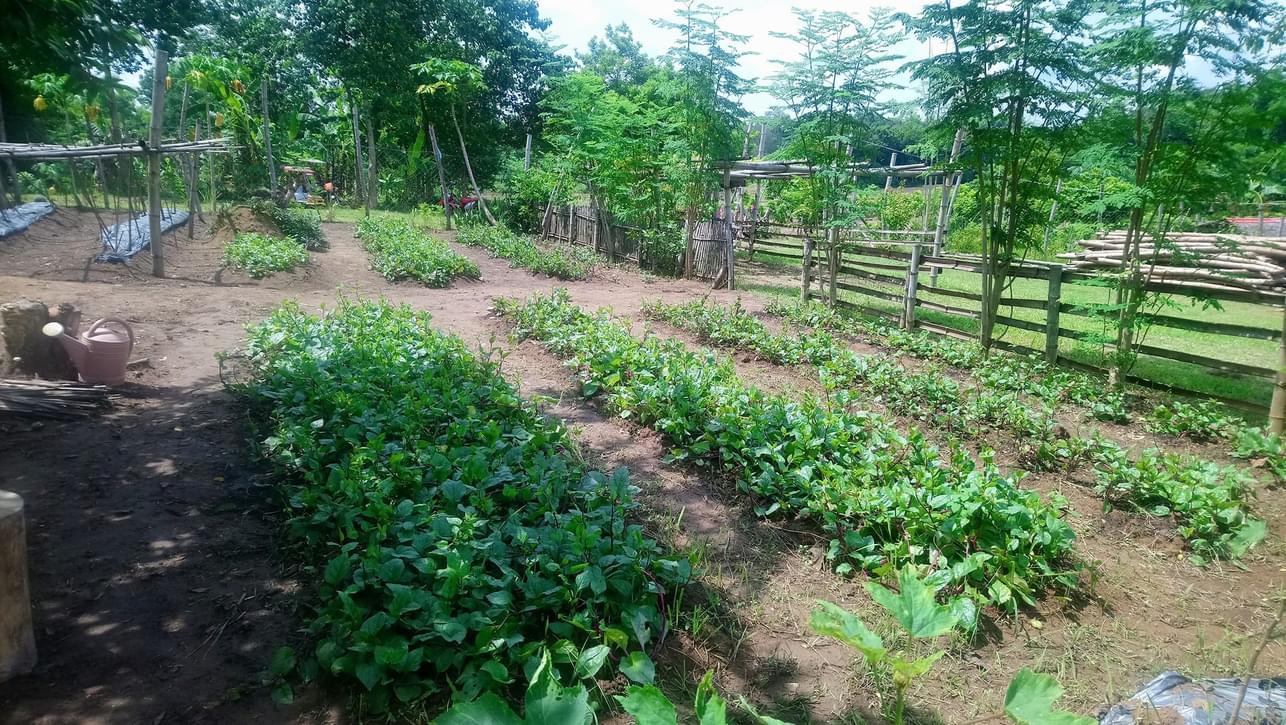
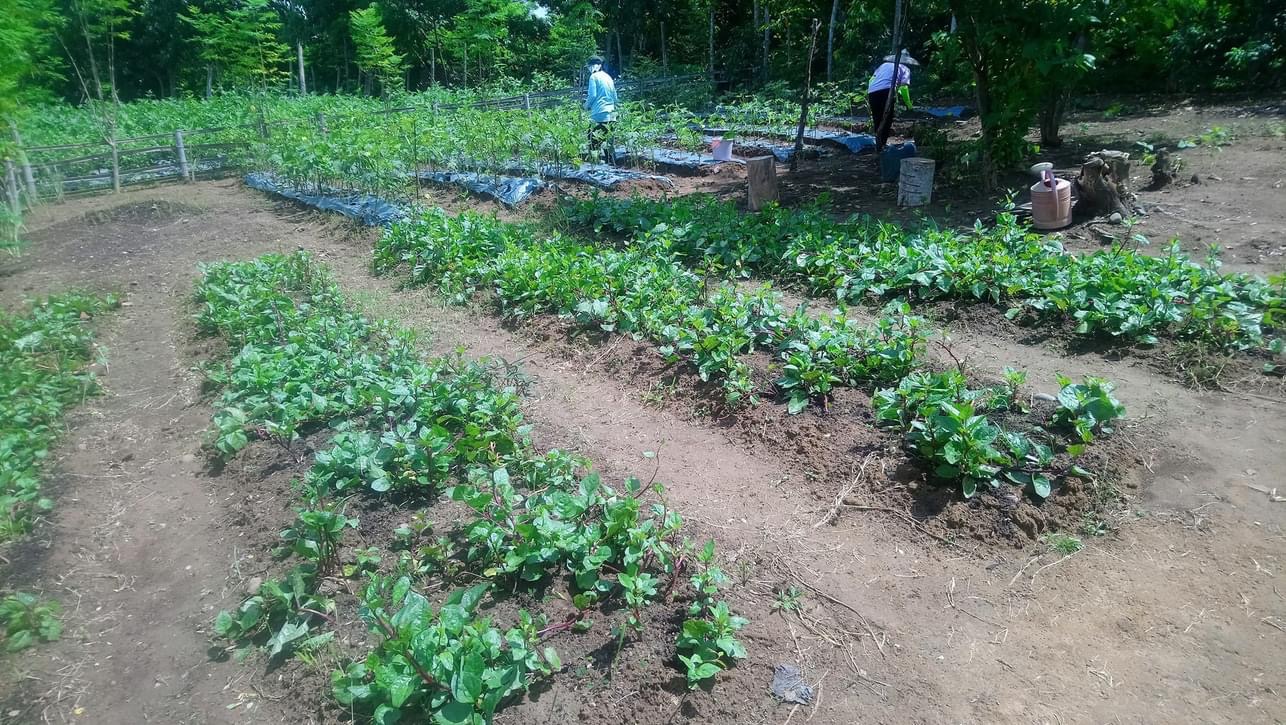
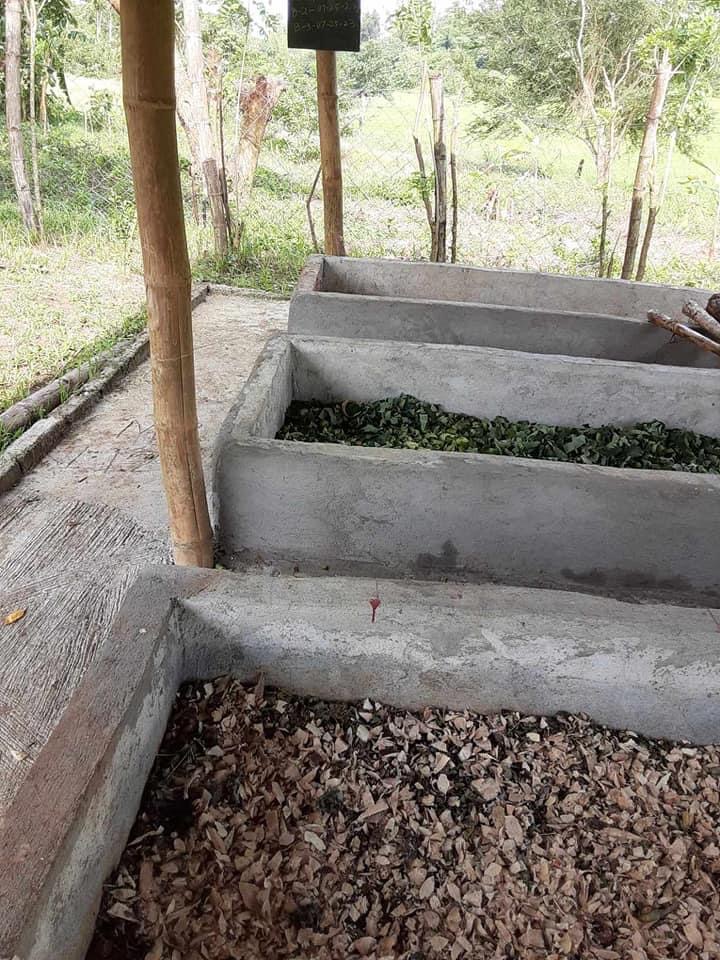
Not much to report on our eighth week as our students are continuing the same activity they did the past week, taking care of their plots, tilling, weeding, planting more companion plants like the citronella, lemon grass and marigolds.  They are also taking care of the vermicompost beds and feeding the worms with more green and brown leaves as well as chopping banana stalks for them.  On the lotus pond front, lotus pond 1 is calm and they are able to use it as a water reservoir for nearby begetable beds.

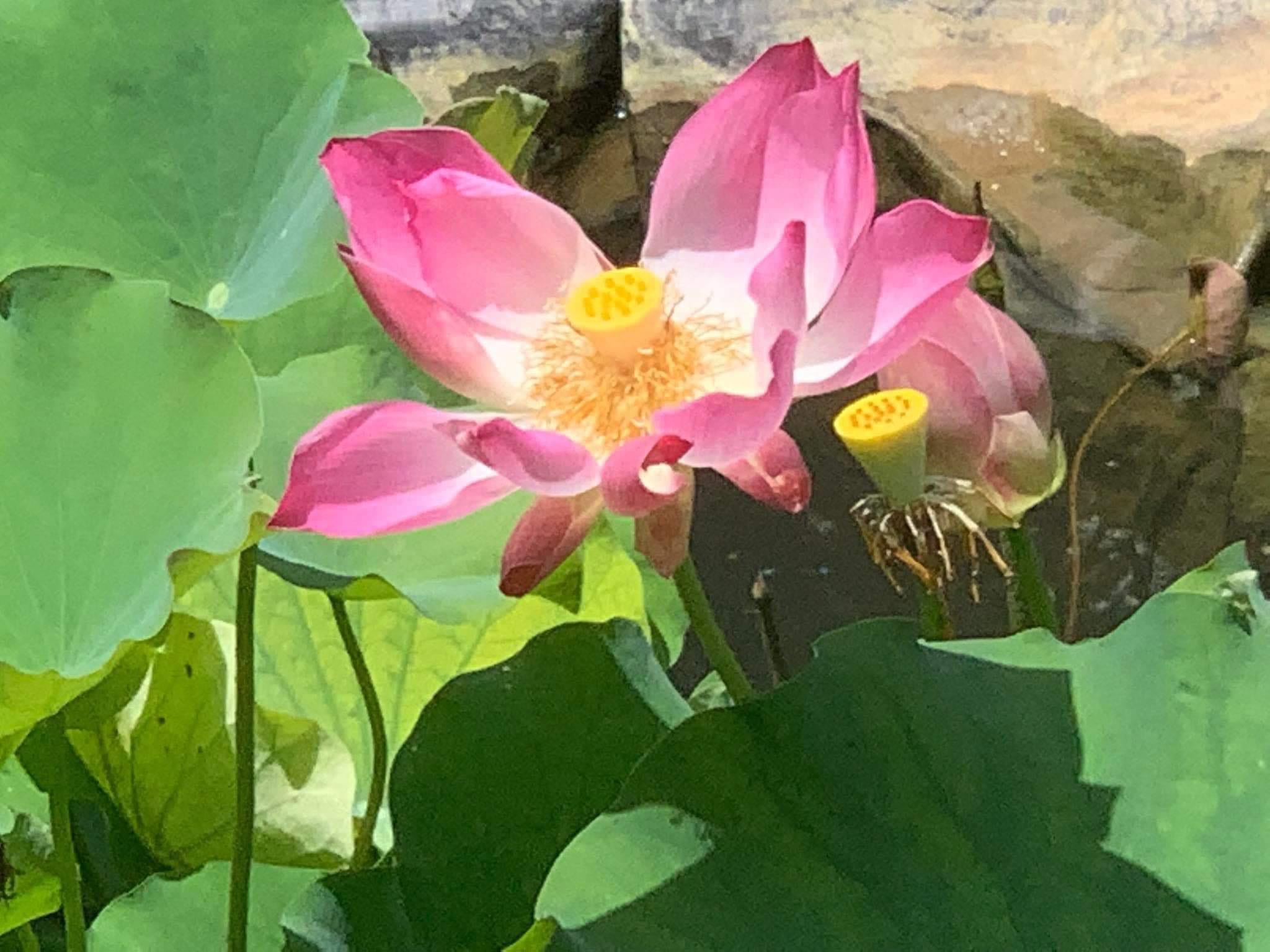
Lotus pond 2 has been planted with 3 pots of lotus plants in the bottom, and the leaves rea floating on top of the pond.  However a new development keeps them from going near this pond for their water needs.  A monitor lizard locally called “Haluan” has been splashing in its waters.  Finally they saw it.  It is a 1 meter long giant lizard that almost is as big as a small crocodile. Except that it does not attack humans.  Research shows that it has a venomous bite but only to its small prey.  Although it feeds on small insects, mice and frogs, it has been known to eat fowl as big as chickens.

They are afraid to get near this giant lizard which is related to the more vicious Komodo dragon of Indonesia, but they said they will try to catch it and relocate it to the rice fields nearby which has a great rat infestation.  They are known to be loners and do not travel in a group however they could lay up to about 40 eggs which is also a human source of food.  It now belongs to one of the extinct species of the Philippines.  They are sometimes caught for food and for use of its leather which could be made into bags.   

The vegetables they have planted are the same: tomatoes, eggplants, okra, peppers, etc. For vine crops they have cucumbers, bitter melon, patola gourd, native pumpkins.  For ground crops they have taro and sweet potatoes. They have also planted some pineapple. For trees, they have almost planted all the coffee and cacao saplings they have. What is keeping them is the fact that since cacao and coffee need shade, they need to plant banana trees to protect them from direct sun. They do not have enough banan saplings to do this yet.  We are also still waiting for the other trees we ordered – the jackfruit, rambutan, and batuan which has not been delivered yet even if we had already paid for it.

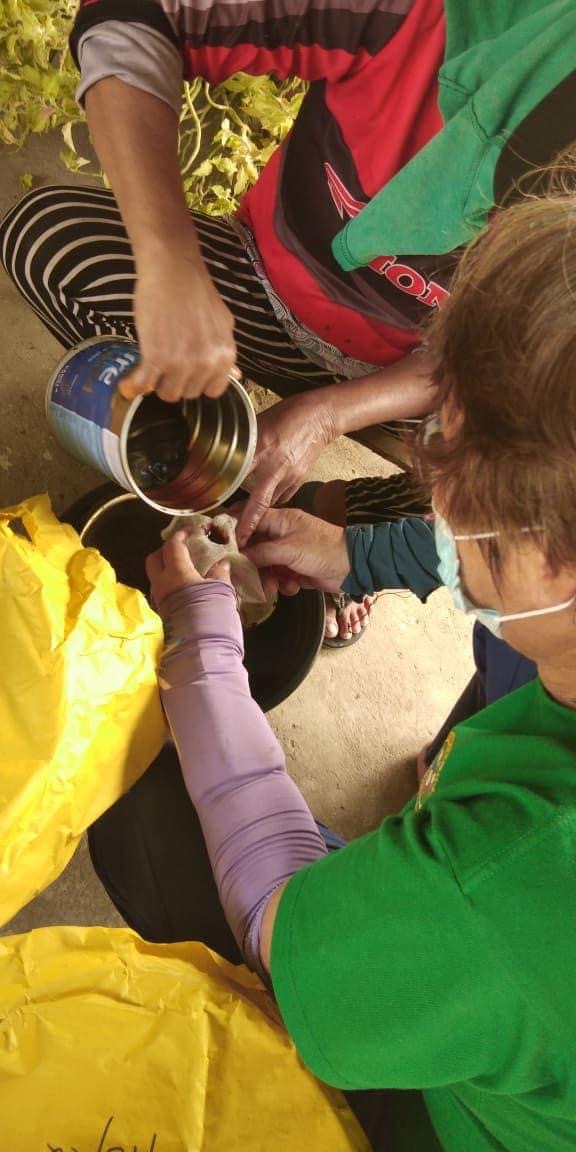
The DA (Department of Agriculture) has given us jars of fermented plant juice (FPJ) and fermented fruit juice (FFJ) to use as organic fertilizers for our plants and vegetables to improve their blooming and fruit production.  They have already fed these to our vegetable plants. They are also in the process of making their own FFJ, calphos (egg shells and banana peels), and madre de cacao nitrogen liquid, as well as neem juice insecticide, pesticide and fungicide juice to protect their plants.  They also have each a sprayer bottle with the baking soda fungicide, insecticide to spray on mites and aphids.

I have also mailed them more seeds to make pollinator gardens with marigolds, zinnia, cosmos, sunflowers. This will be their next project. They have to attract pollinators, because without them there will be no fruit coming out of the flowers when they are not pollinated by insects.

The students come daily to check on their plots and vegetables so instead of a 5 day a week program, it is now a 7 day a week program. Their vegetables are now blooming, and neighbors who pass by are starting to notice them.  So the students are very wary about their crops being stolen away from them when they are not there to keep watch.

The students had been given free seeds, fertilizers, pesticides, fungicides and training.  They are also fed with 2 snacks and lunch daily, and we had given them 2 sacks of rice to suffice them for the length of their training.  Their food is augmented by other fruits and vegetables that they are able to pick from the farm like moringa, etc.  When their harvest is sold, they will have income from the sales, so they treat this seriously as a business and source of income for themselves and their families.

This is the eighth week report. Pictures to follow.  We wish these students the best.

Sincerely yours,

SGD. Zonia Velasco

Mabuhay Training Program
Seventh Week – Mabuhay Agritech Project in Iloilo, Philippines

On our seventh week, our students continue to work on their garden plots, weeding, and tilling the soil around, and now have started to increase the number of companion plants around their plots.  Other companion plants are citronella and tanglad (lemon grass). This was delayed because this was their first experience in using companion plants to safeguard their gardens from pests and diseases. No one ever did this practice in the Philippines before.

The vegetables they have planted are the same: tomatoes, eggplants, okra, peppers, etc. For vine crops, they have cucumbers, bitter melon, patola gourd, and native pumpkins.  For ground crops, they have taro and sweet potatoes. They have also planted some pineapple.  For trees, they still have to plant the saplings they have, and we had ordered robusta coffee, cacao which had already arrived.  Banana trees have to be planted with these last two trees as they need shade. But the jackfruit, rambutan, and batuan have not been delivered yet even if we had already paid for it. In apology, the local DA, gave us some cadios (pigeon peas), gaway-gaway. small peppers and taro root plant. They also gave us some vermitea, fermented plant juice (FPJ), and fermented fruit juice (FFJ) to use as organic fertilizers for our plants and vegetables to improve their blooming and fruit production.

I have also mailed them more seeds to make pollinator gardens with marigolds, zinnia, cosmos, and sunflowers. This will be their next project. They have to attract pollinators because without them there will be no fruit coming out of the flowers.

Lotus Pond 2, our water reservoir pond uphill has already been planted with lotus and starting to fill up. Once it fills up, they will add some tilapia which they will fish from the nearby stream. The fish will feed off from the algae off the pond wall, and will also feed and destroy any mosquito larvae.

Vermicompost beds: they continue to feed their vermi beds daily, with green and brown leaves, as well as chopped banana trunks. These beds also need to be aerated and moistened as well.

Fungi control. They have sprayed the Trichoderma hazarium to strengthen the resistance of the plants to fungi attack and have sprayed the Agriblue copper compound to cleaned areas of the plants. “Cleaned” applies to cleaned diseased areas,  after cutting off the anthracnose with a sterilized knife and spraying the cut area with hydrogen peroxide. They have also used Isarium SP, another anti-fungicide and bactericide to their vegetables.

This is the treatment plan given by the Department of Agriculture. 1)Improve the systemic strength of the plants from the inside out by feeding them with Trichoderma (another fungus that combats the bad fungi), 2) continue physically removing (and destroying by burning) the anthracnose from the stems of our plants, 3) spraying plants with copper compound which is preventative to new lesions. Since anthracnose thrives in moisture, spraying will be done only when rainfall for 12 hours is not expected. They also learned to reduce plant stress, keep the root zone moist but the surface dry, and ensure adequate and appropriate nutrition. Magnesium and potassium are minerals that will strengthen stems and leaves.

The good news is that the Trichoderma and copper treatments were given for free by the Department of Agriculture.  The other good news is that our dragon fruit trees to show their gratitude maybe, gave us a bountiful harvest last week.  They also harvested some eggplants, and the okra will be ready next week.  They also harvested some saba or cooking bananas which they boil in the afternoon and use to complement their snacks.  We provide students with lunch and 2 snacks in the morning and afternoon. They cook their own food. We bought them 2 sacks of rice which they will try to suffice with till the end of the program. They complement their food with vegetables they could source and pick from around the farm.  They are coming daily to check on their plots and vegetables so instead of a 5-day-a-week program, it is now a 7-day-a-week program. Now that flowers and fruits are coming, they are more motivated to watch what is happening to their plants daily.  They are also wary of neighbors who are starting to notice their vegetables and are afraid they will come to steal them when they are not there.

This is the seventh-week report. Pictures to follow. Students are grateful for this opportunity.  On their own, they could not afford to buy their own seeds, pesticides, and fertilizers, and they did not have land where they could garden and plant. They are also motivated by the fact that they will get an income from the proceeds of their sales. We wish them the best.

Sincerely yours,

SGD. Zonia Velasco

Mabuhay Training Program