Tenth Week Report: Mabuhay Agritech Ministry, Iloilo, Philippines – October 28, 2023
The Mabuhay Agritech mission project continues in Sitio Bitin, Barrio Janipaan Oeste, New Lucena, Iloilo.
The students continue the following activities daily:
They have finished with all their class lectures. Their last lecture was on fungi which they observed attacking the plants and trees, and through the Department of Agriculture, learned effective ways of control. The students now keep their notebooks on the farm, so they can look at the recipes for concoctions they make, as needed. They come daily to work on their garden plots, tilling and aerating soil, weeding, and planting the germinated seeds they had last week. They did not believe in the baking soda spray pesticide/fungicide, as this has never been practiced by their ancestors, but now they see where pests had attacked and eaten their plants and they had no choice but to use them and are now able to observe beneficial effects. Mostly they use them for spot sprays on some areas which they find during inspection.
They continue to make their own organic concoctions for fertilizers and pesticides from some ingredients they source from what’s available on the farm like madre de cacao, and neem trees. They also make their own calphos (calcium-phosphorus) from eggshells and banana peels. They continue to tend to their vermicompost beds and daily they shred banana stalks to fill the beds and still use the green and the brown leaves to feed them. Some vermicompost had been harvested and used for the germination trays. They also mix them with water to make vermitea which they use on their planted beds.
They continue to work 7 days a week now, although they took a day to participate in the city’s “Cry of Jelicoun Festival” commemorating the attack on the town by the Spanish conquistadores in the 1800’s, and how the residents armed themselves with bolos and sticks to fend off the invaders and won, thwarting the Spanish occupation in their town at that time. Of course, history tells us that this was just a temporary victory as Spain colonized the country from the 1600s to 1898 when America came and colonized the country until 1945.
Meanwhile, the food allowance supply of 1/3 a sack of rice and other canned goods, are still enough to feed them for lunch and 2 snacks in the morning and evening. The tropical heat in the 40’s is unrelenting, and they must stop at noontime when the sun is directly above them, and rest until 2 pm to take their siesta. This gives them time to cook and rest. The rice fields had overflowed with water, and increased water came down to flood our fields from upstream. A catfish pond overflowed upstream and dumped plenty of catfish, a few of which they were able to catch and cook. They broiled them over charcoal and ate them with rice and cooked hot soup with vegetables like pechay and moringa that are plentiful and sourced from the farm.
The meter-long giant lizard monitor species which locals name as “halu” or “Haluan” has not been back, and they think it went into the rice fields where there are plenty of field mice for it to feed on.
The water reservoir pond 2 which we have planted with lotus is still looking muddy as it is fed from rainwater flowing down the hill, but they report that planting the lotus there has helped clear up the mud. It rains every night now and fills up these 4 feet x 4 feet and 3 feet deep pond. This is their water source during the day to water their vegetable plots.
Tree Planting: Coconuts, cacao, and coffee. We have allotted a portion of land where we have just counted 100 cacao trees, 100 dwarf coconut trees, and coffee. These were planted there in the past years. Unfortunately, the coffee died, because of lack of shade. So we are planting banana trees as a fast solution to give shade to new coffee plants and new cacao plants soon. However, banana trees do not last as long as cacao and coffee which are both 100-year-long trees. The long-term solution is to intercrop each cacao and coffee with coconut trees, which are also 100-year-long trees. When the coconut trees grow taller, they could be the permanent shade tree for the coffee and cacao. Each student group (we have 2 groups) needs to plant at least 5 trees, and this is still the unfinished part of their task. The mayor of New Lucena has started a cacao processing plant which she says will process cacao from seed to chocolate, so she is encouraging the planting of these trees.
Other trees we have which are growing well are the avocado and bignay trees. We have fuji apple trees, and they are getting taller. We have a citrus area, but they think the pomelo in this area is being attacked by fungi also. The bananas are also being attacked by fungi, so we will ask the Department of Agriculture’s help to thwart this problem. They gave us Trichoderma, Isarea, and copper treatments before.
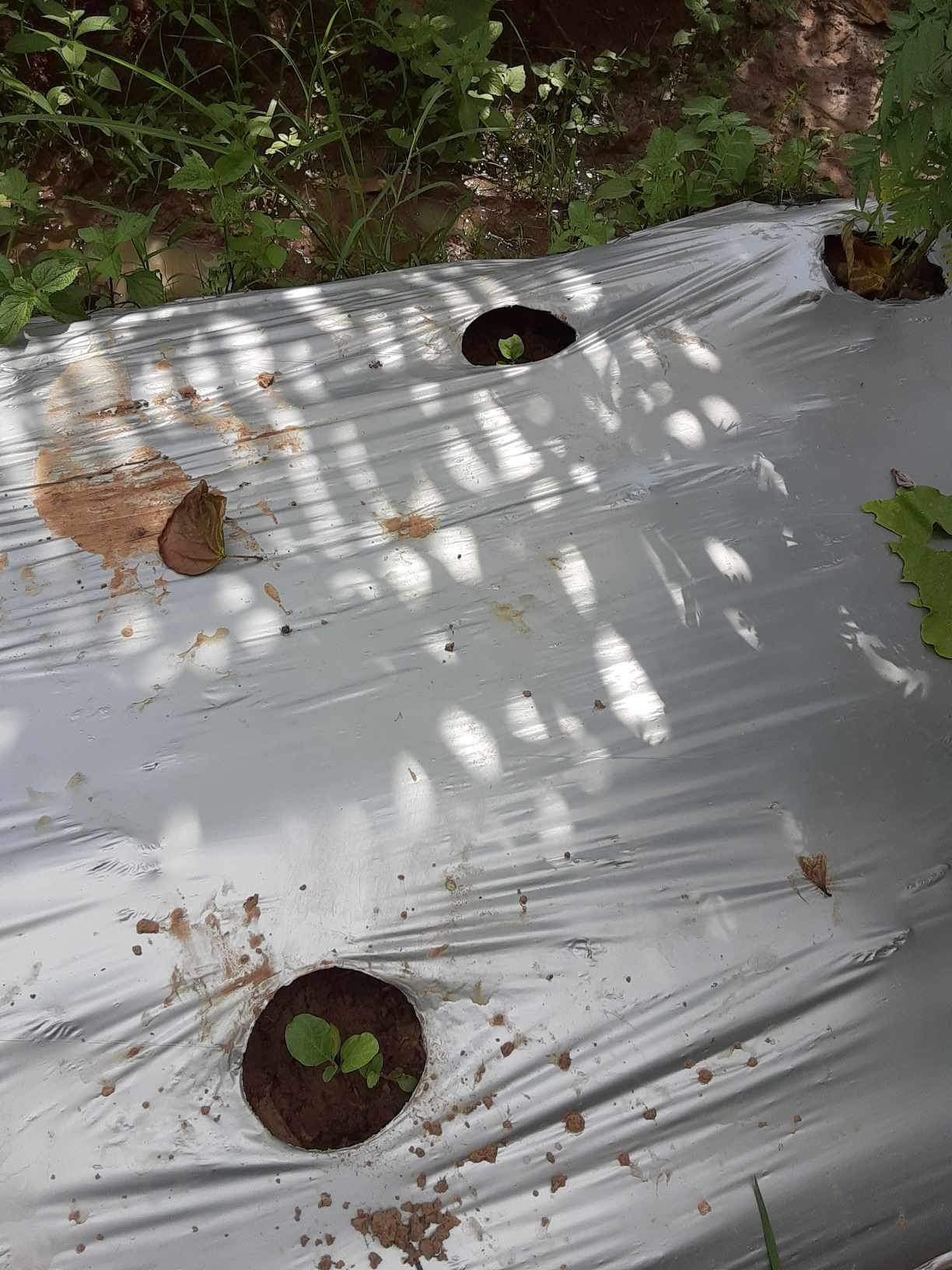
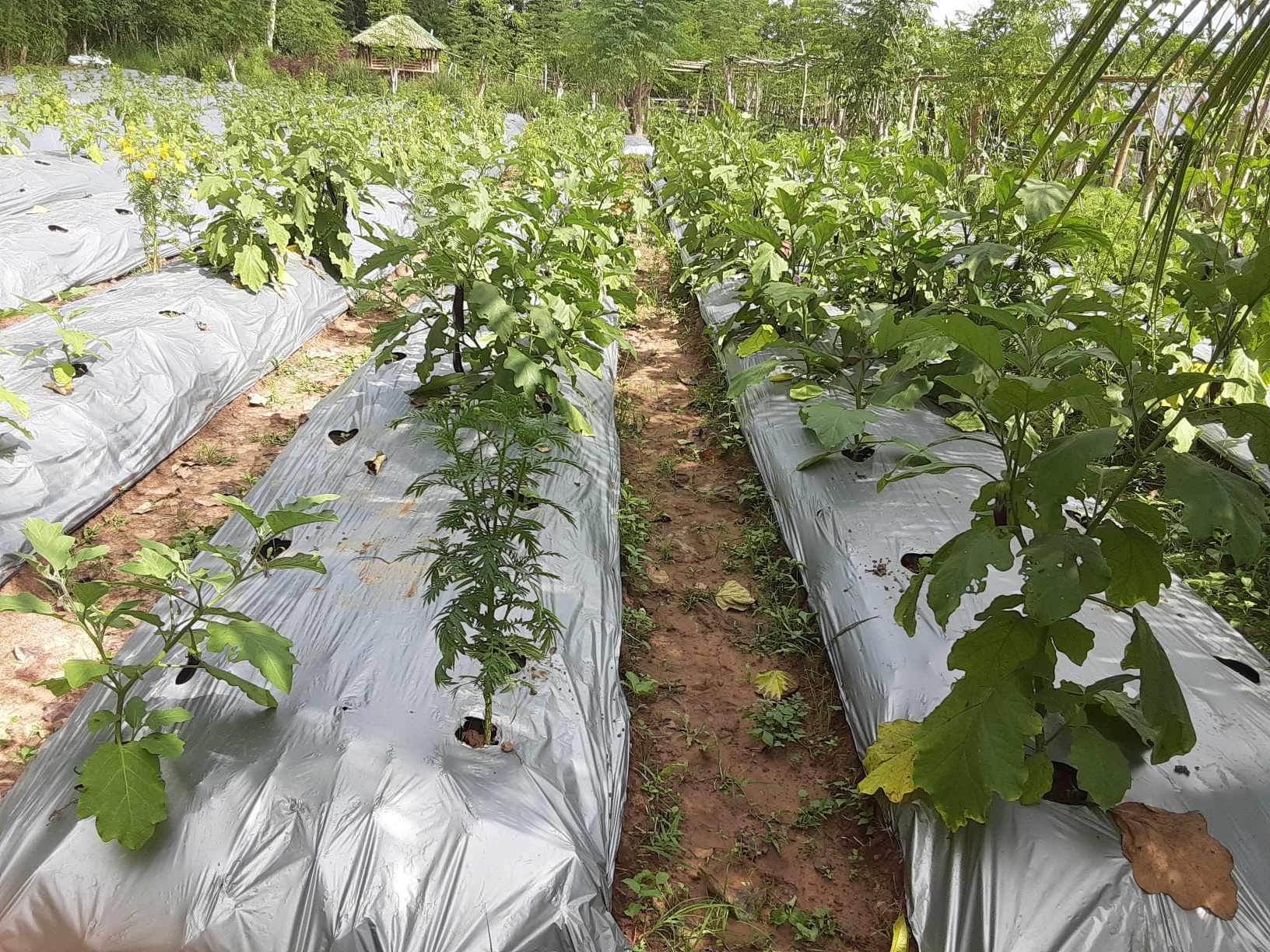
Vegetable Gardens. The 7 new plots they completed and covered with mulch last week, are now ready to be planted by the newly germinated seeds.
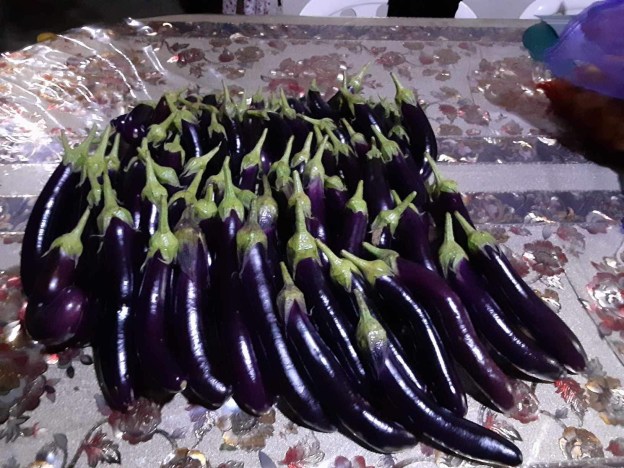
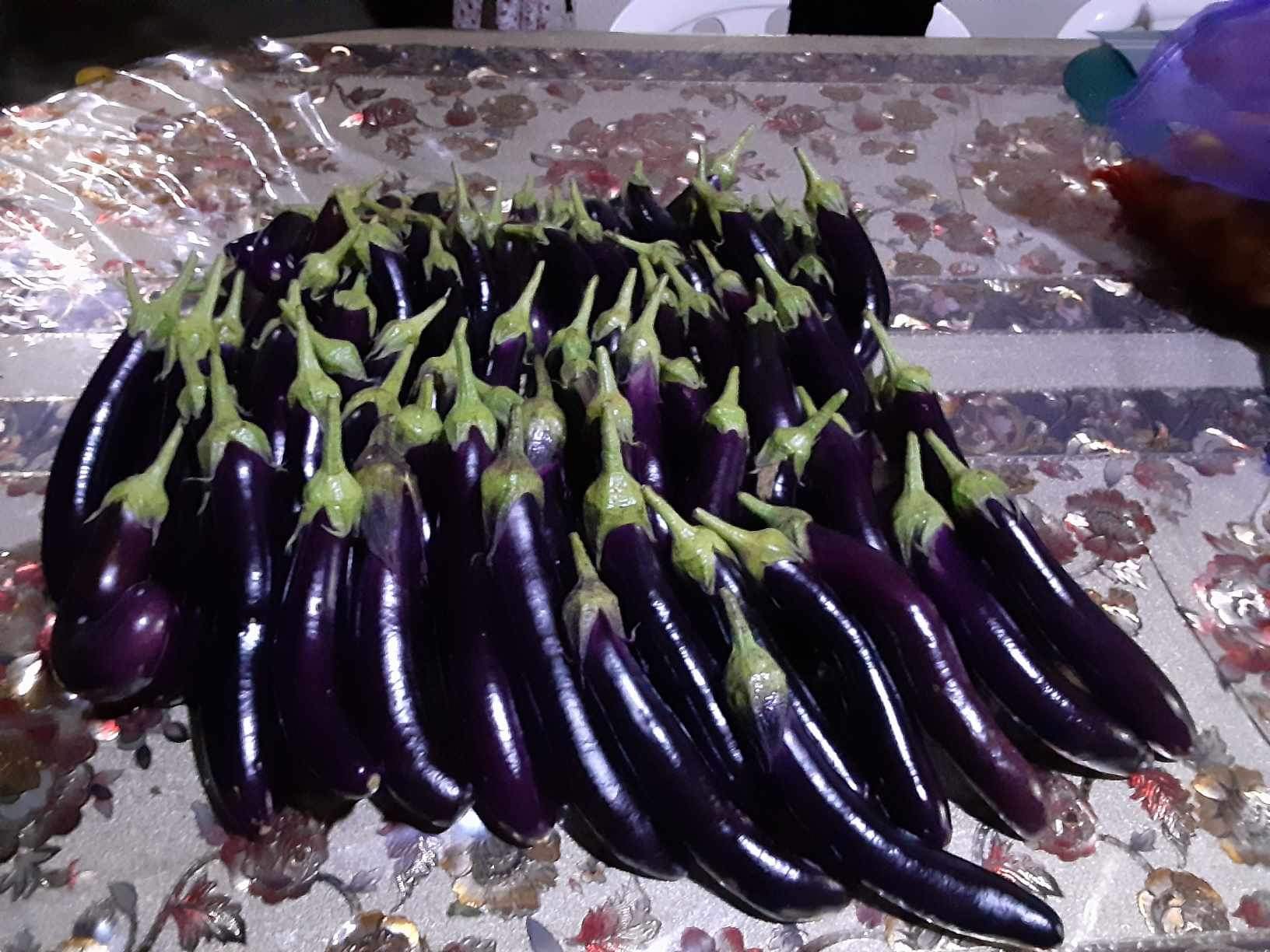
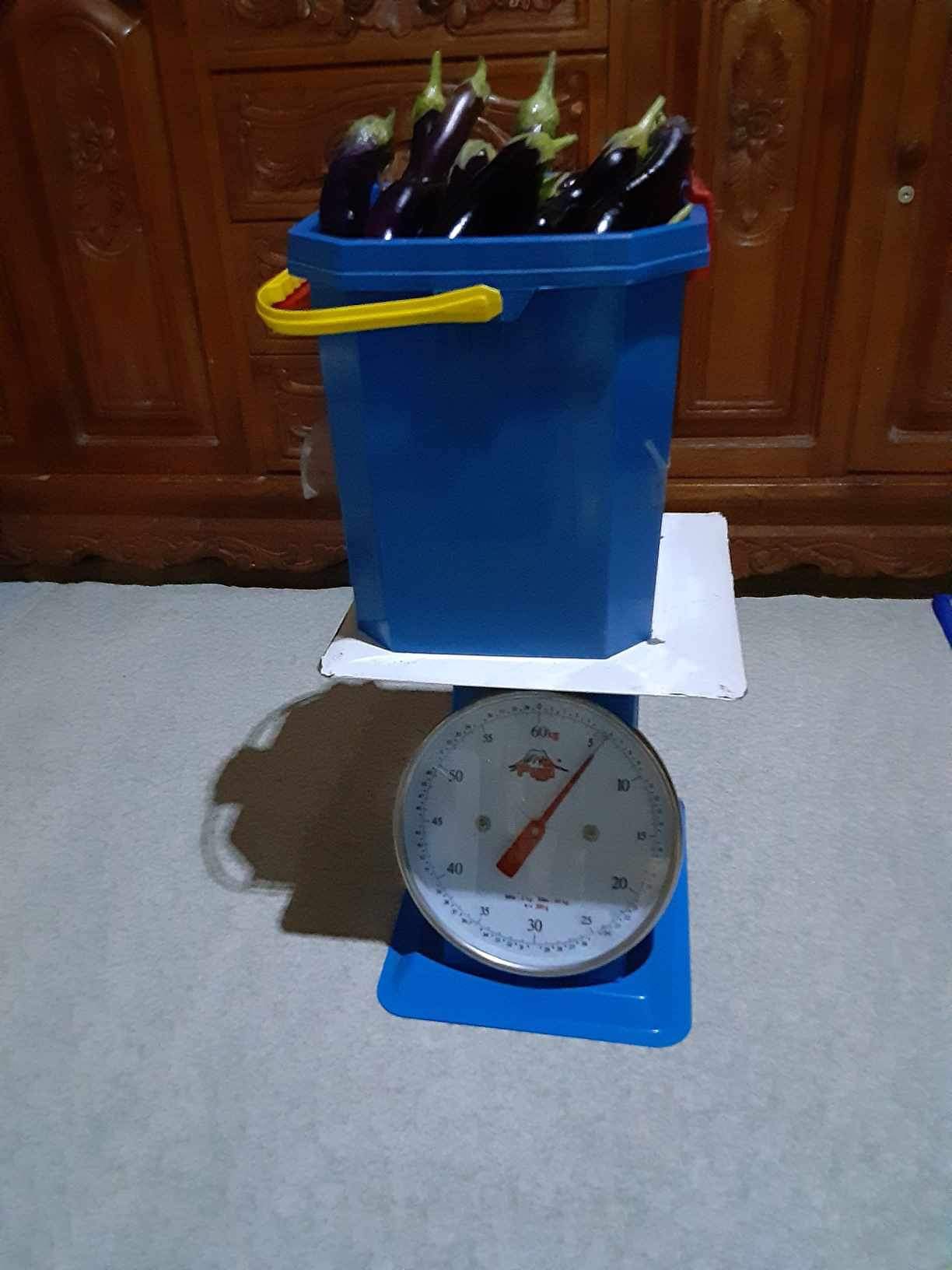
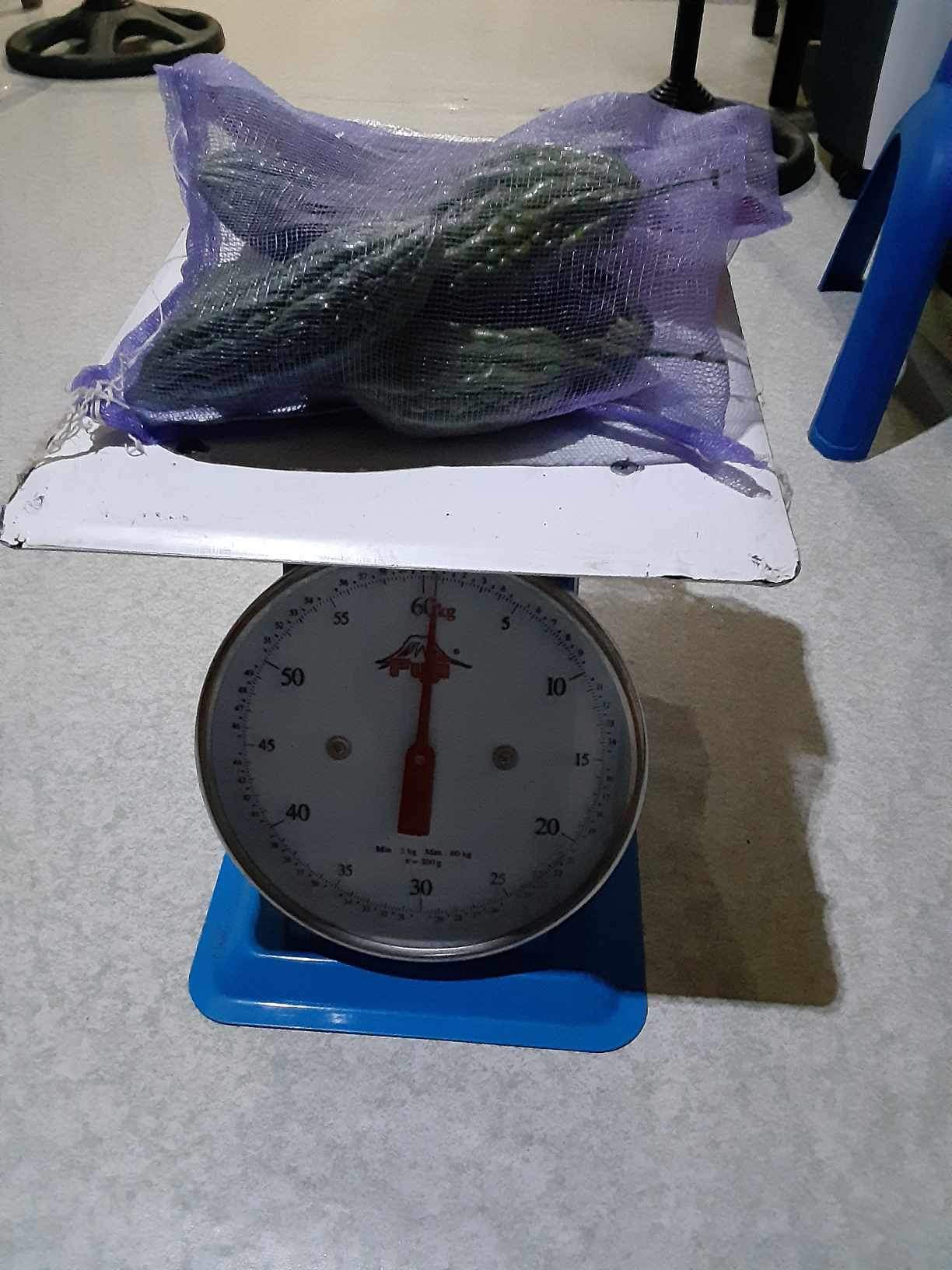
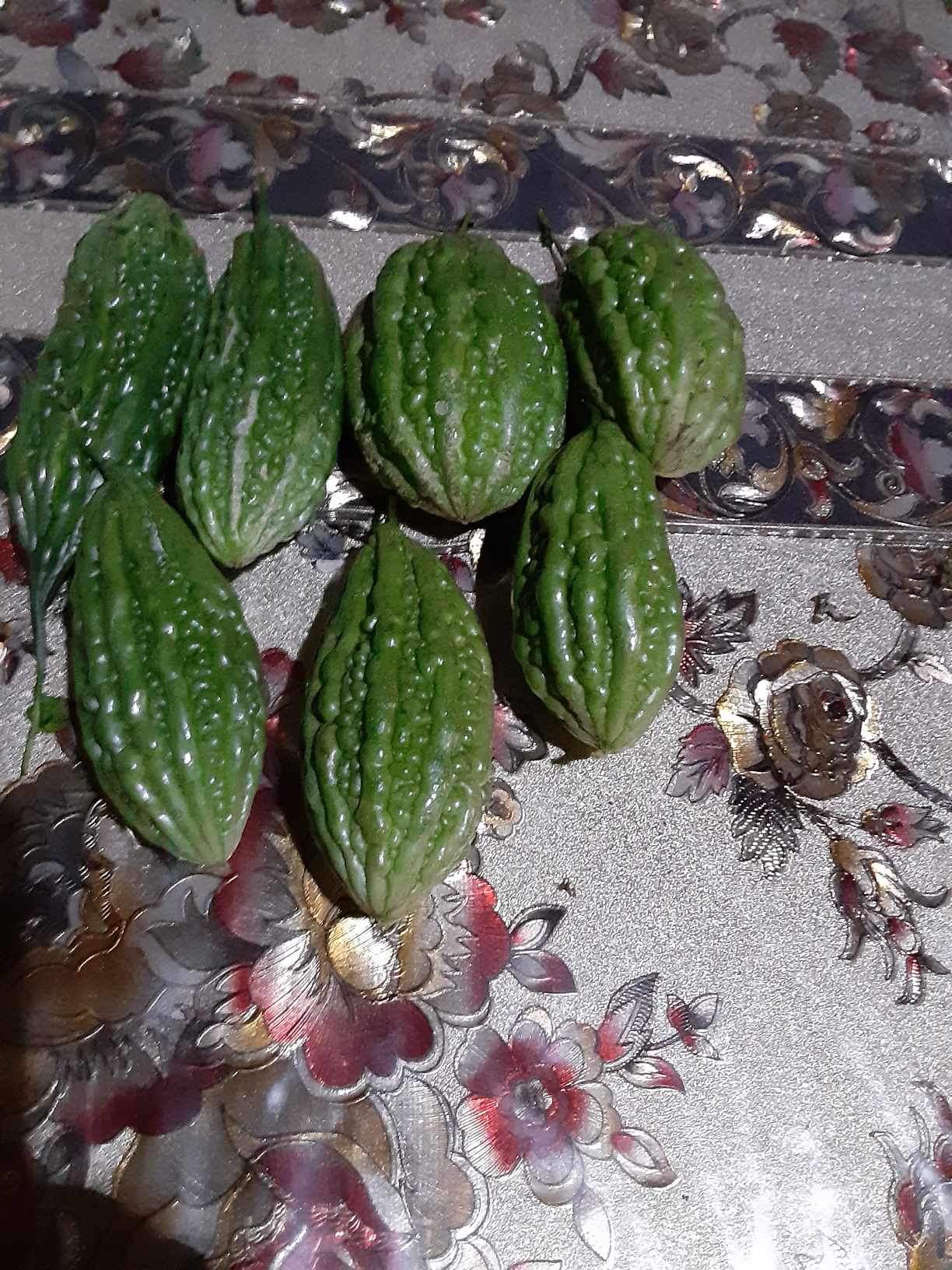
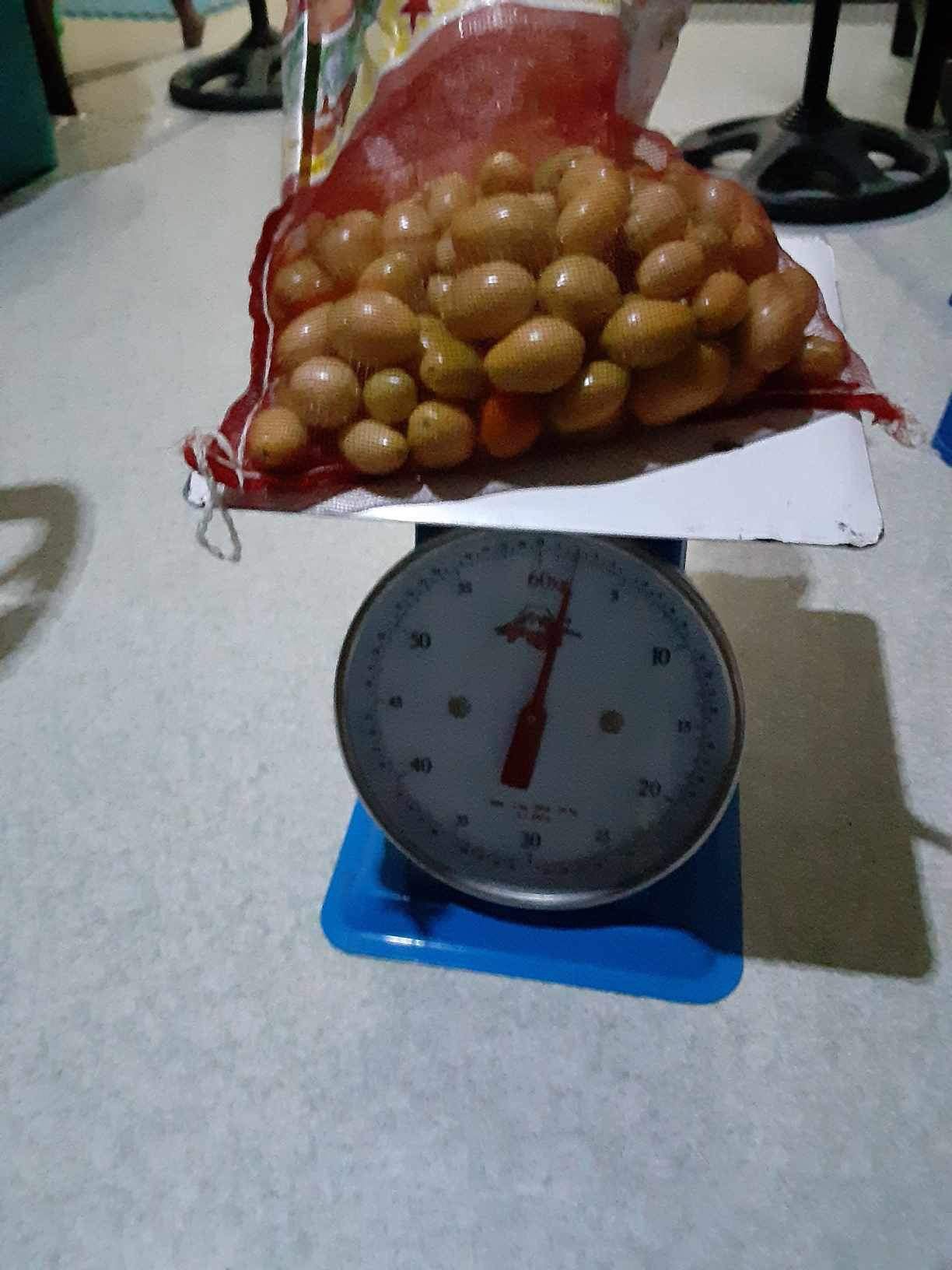
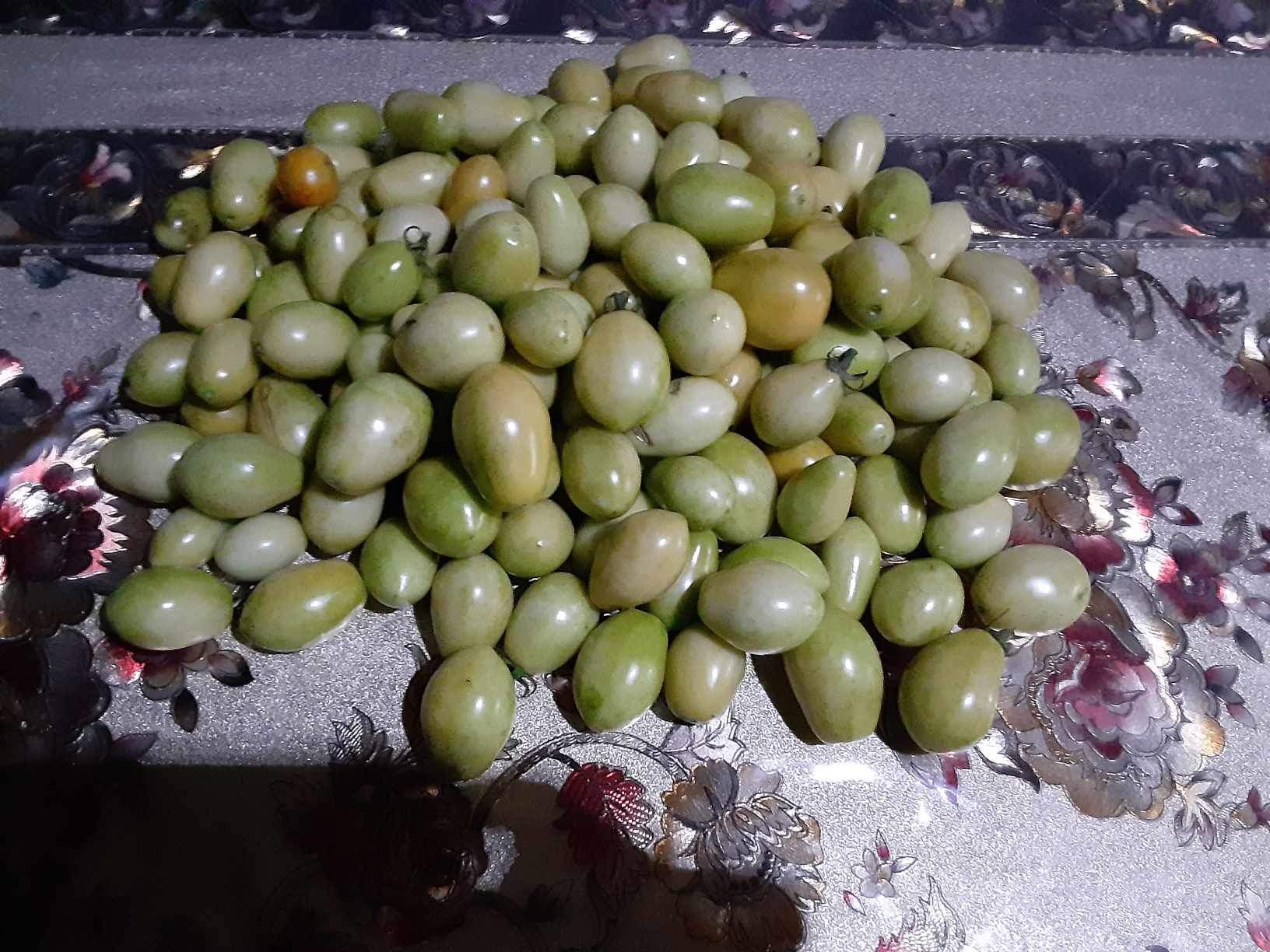
Harvest. Harvested another 5 kilos of eggplants. The tomatoes have been affected by the rain and are losing their flowers from the heavy overnight downpour. However, they are hopeful they can harvest some as they still have some small green fruits getting bigger daily. Okra and other vine vegetables are still growing, but no flowers or fruit yet. The vine vegetables are still growing, and the squash is looking healthy as it creeps on the ground. But no fruits yet. Vine vegetables are ampalaya (bitter melon), pole beans, cucumber, and patola (long gourd).
Pollinator plots. They are planting their germinated seeds for these plots. The zinnias, cosmos plants, are growing and starting to bud. Sunflowers still need to be planted. There already are marigolds planted and are used as companion plants together with citronella and lemon grass herbs to control pests. We have had bees flying around and had been the major pollinators for the adjoining dragon fruit field flowers, but lately, they report seeing butterflies also.
Companion plants and herbs. I have sent them seeds for rosemary, basil, and chamomile, but they have not germinated nor planted any of them yet. Marigolds, citronella, and lemon grass are known to help control bugs, pests, mosquitoes, flies, etc. They seem to work as we have fewer pests flying around, but because of the number of vegetable plots that have been made, we need to plant some more. Lemon grass is used as a spice for cooking and is especially good to put in the cavities of roasted fowl and lechon pig. It is also used for boiled chicken soup, etc. Citronella grass can be cut into short pieces and cooked with coconut oil or olive oil and can be used to protect the body from mosquito and other small insect bites.
Proof of the land turning fertile through organic methods: This is an 11-hectare farm, of which only 5 hectares had been used for rice planting before. Our Mabuhay Agritech Ministry is only using about a hectare for our projects.
They are happy to report that they now find catfish, mudfish, and a small type of fish that are in the shallow water of the rice fields. They are now also finding edible small snails (like escargot) that they could gather for cooking. 5 years ago, the tenants who leased the rice land had been using heavy chemical fertilizers. They thought this Western way was progress. But the land has declined since, and it was only about 4 years ago that we started to forbid anything but organic practices. This rice field is in a natural depression about 15 feet lower than the hills that are on each side. It is fed by rainwater from upstream during the rainy season. The whole area, including all the farms upstream, has used heavy chemical fertilizers and pesticides in the past. This has not only lowered their harvest yield through the years but also the waterspouts that we used to have in the fields disappeared. All the incidental catfish, mudfish, and other small fish that they fished out from the wet rice fields had disappeared since also. However, recently, our farmhands reported that they were able to catch catfish and mudfish again when the fields were full of rainwater. The whole farm is now returning to the “living” land it used to be.
This is our tenth-week progress report. We continue to make a difference in that part of the province. We are proud of our students’ achievements and the increased practical knowledge they are starting to enrich themselves with. Old detrimental practices are being replaced by organic productive knowledge. We are definitely changing lives. Photos will follow.
Very sincerely yours,
(Sgd) Zonia Velasco
Mabuhay Fellowship
 Mabuhay Fellowship