The Mabuhay Agritech mission project continues in Sitio Bitin, Barrio Janipaan Oeste, New Lucena, Iloilo.
The students continue in the following activities daily:
Tilling and aerating soil on their plots, weeding. This week they also finished spraying with isarea fungicide to protect the soil and the plants from fungal infection. They have baking soda spray bottles with them also for spot sprays on some areas which they find after inspection. They also continue to make their own organic concoctions for fertilizers and pesticides from some ingredients they source from what’s available on the farm like madre de cacao, and neem trees. They continue to tend to their vermicompost beds and daily they shred banana stalks to fill the beds. They already have harvested some compost and since it is still not enough in quantity, there was enough to make vermitea which they use on their planted beds.
They also work 7 days a week now, and they have a food allowance which allows them to cook their lunch and snacks in the morning and evening. They still have half a sack of rice, which we will add to just in case they run out of rice. They expend a lot of physical energy in their work and hence need to eat more. They buy protein-rich products and augment them with vegetables like moringa and other root crops found on the farm.
Last week a meter-long giant lizard monitor species which locals name “halu” or “Haluan” splashed into their water reservoir 2, also fondly called lotus pond 2, where they had already transplanted 3 lotus plants in pots under it. The planted lotus is there to help purify and clean the water of mud and algae.
This pond is only 4 feet x 4 feet and 3 feet deep. It is on top of the hill and is filled up only by rainwater whenever it rains, which is about 3-4 times a week at night. This pond never filled up to the rim, and during the rice planting season, one of the farmhands soaked rice seedlings in it and made it turn cloudy, and soon green algae formed. To control the green algae, they tried to put Clorox into it but did not know the full amount to put for the volume of water present. So they poured the whole can of Clorox in. The following day, they realized they put too much as it killed 3 frogs which they saw floating on the surface. They fished these out and started to empty the pond again since the water started to smell foul, but it was the scent of these dead animals that attracted the monitor lizard there. Although Monitor lizards are not known to be harmful to humans, they do have venom and are known to eat pests, frogs, smaller lizards, fish, mice, and rats. They are also dead body scavengers. It is no longer there now and has probably moved on to another feeding area where it can find food. Hopefully, it goes to the adjoining rice field to find the rats that are menacing rice harvests.
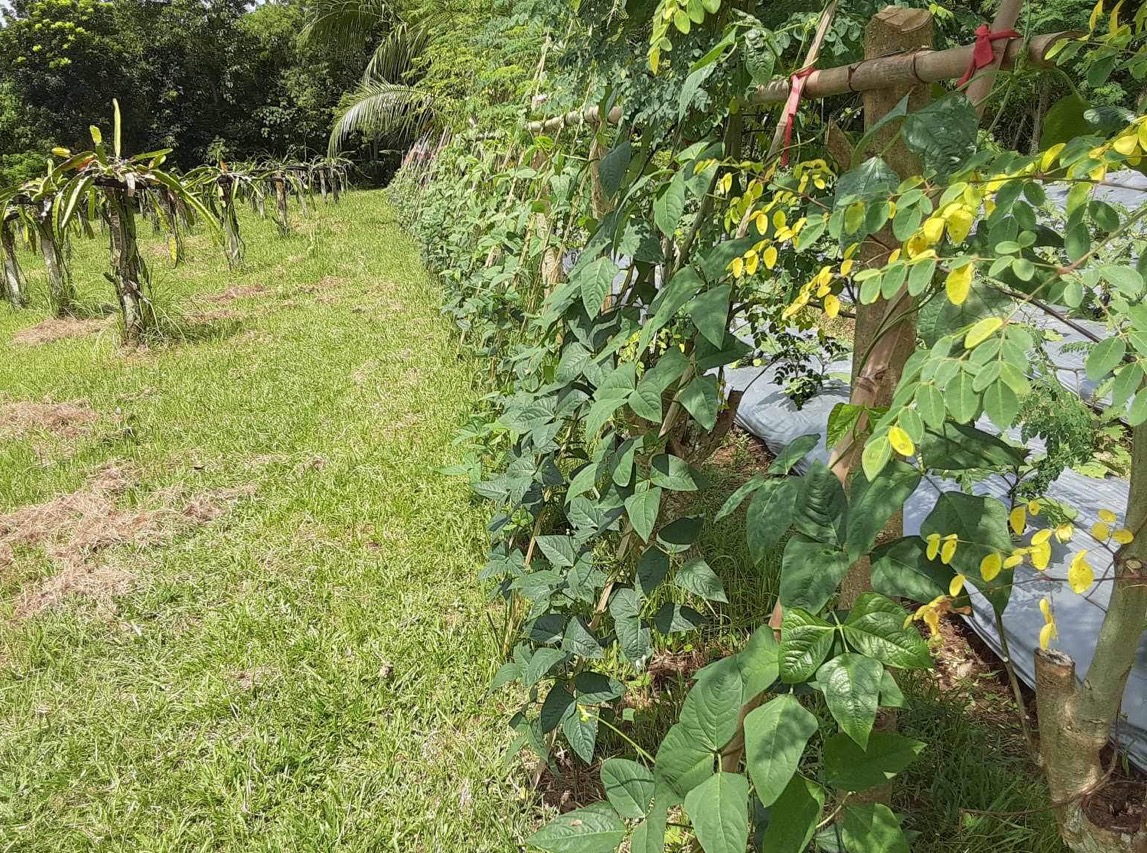
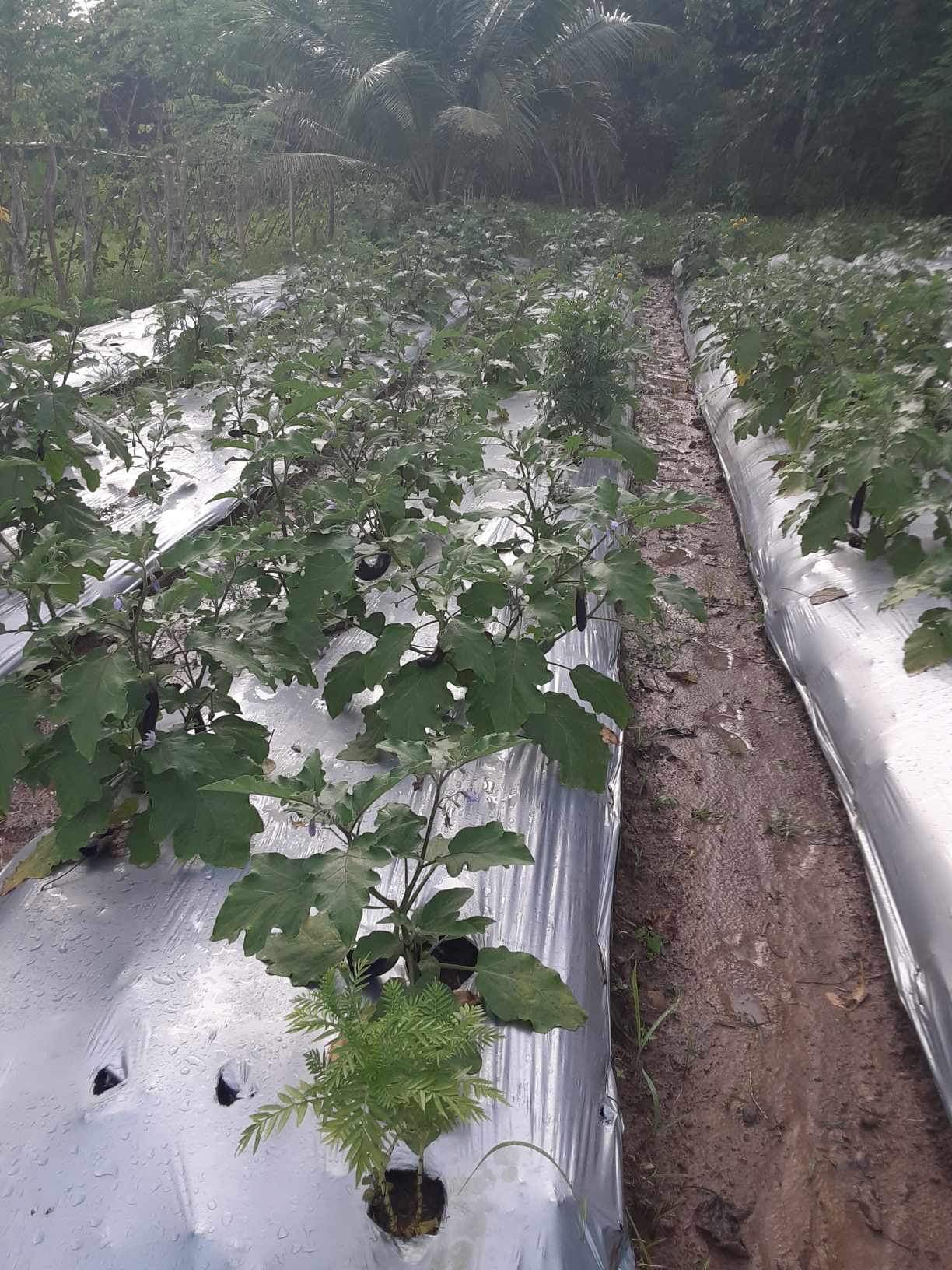
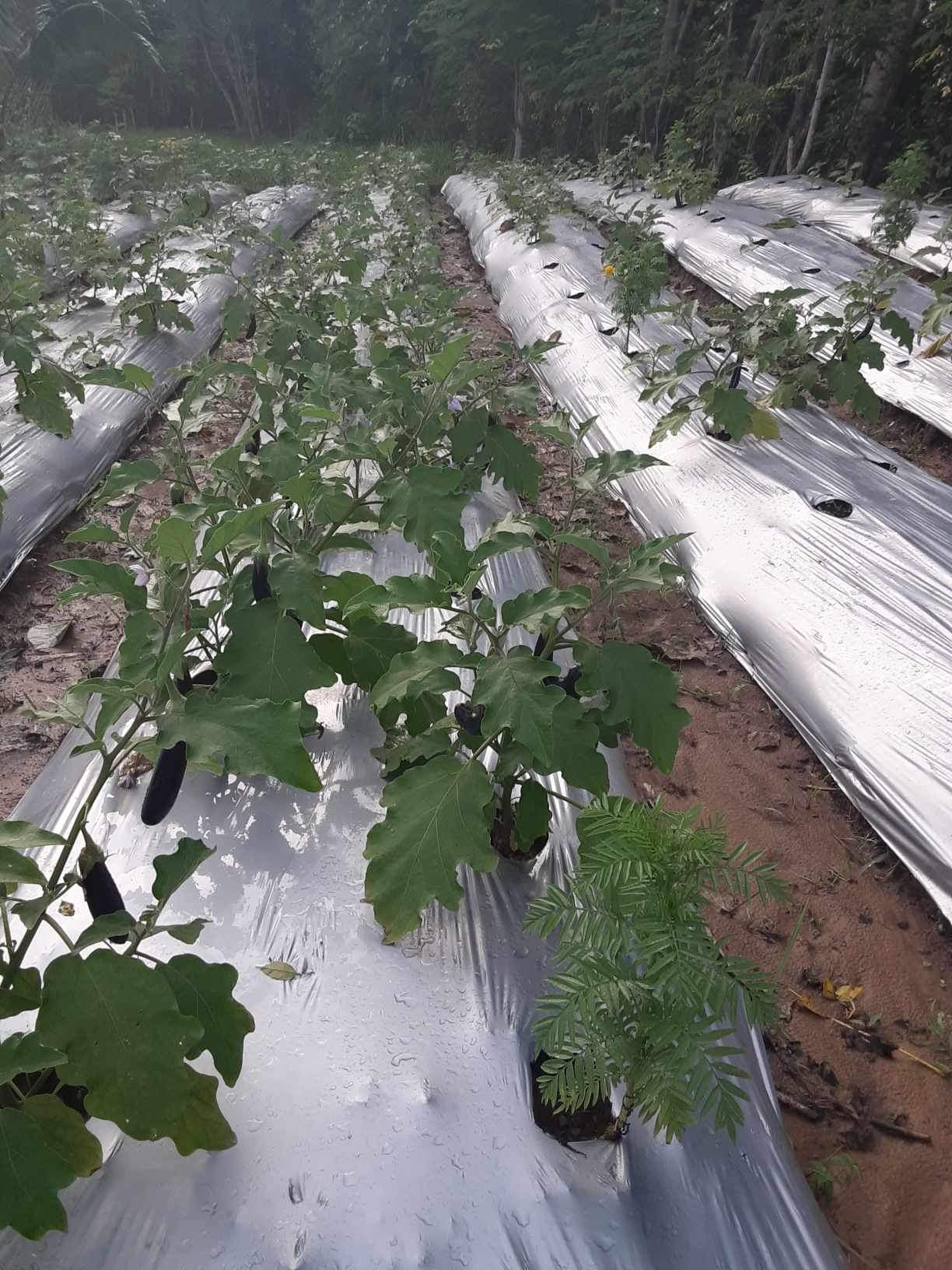
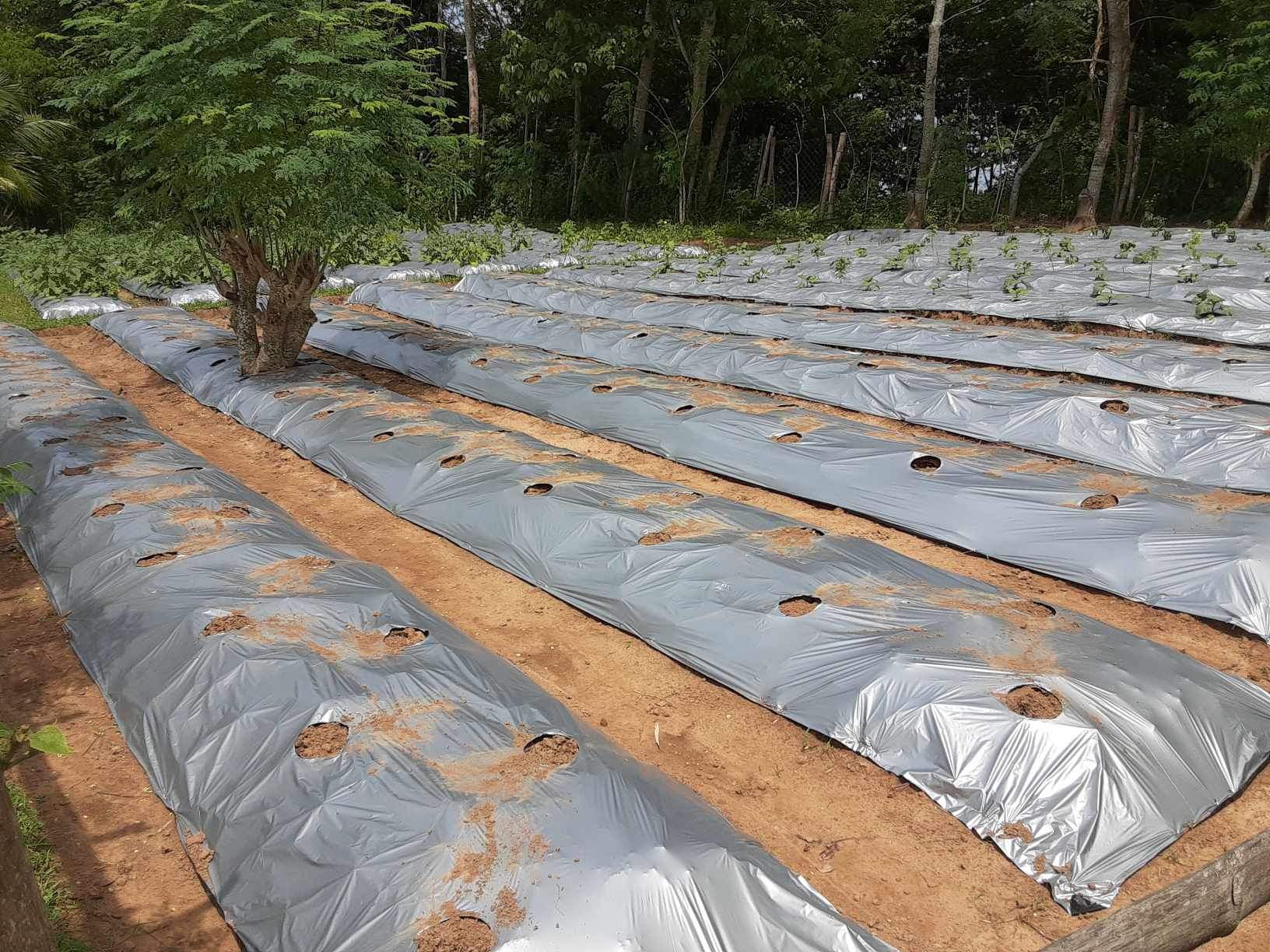
Vegetable Gardens. Some of the germinated vegetables planted did not make it, so some plots are incomplete, but they said they will replant some as they continue to germinate some more seeds again. Also, they made another new 7 vegetable plots and had just covered them in plastic mulch this week. They are also germinating more vegetable seeds.
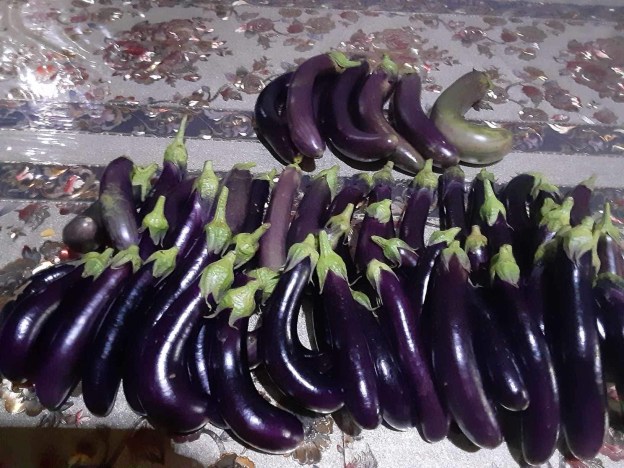
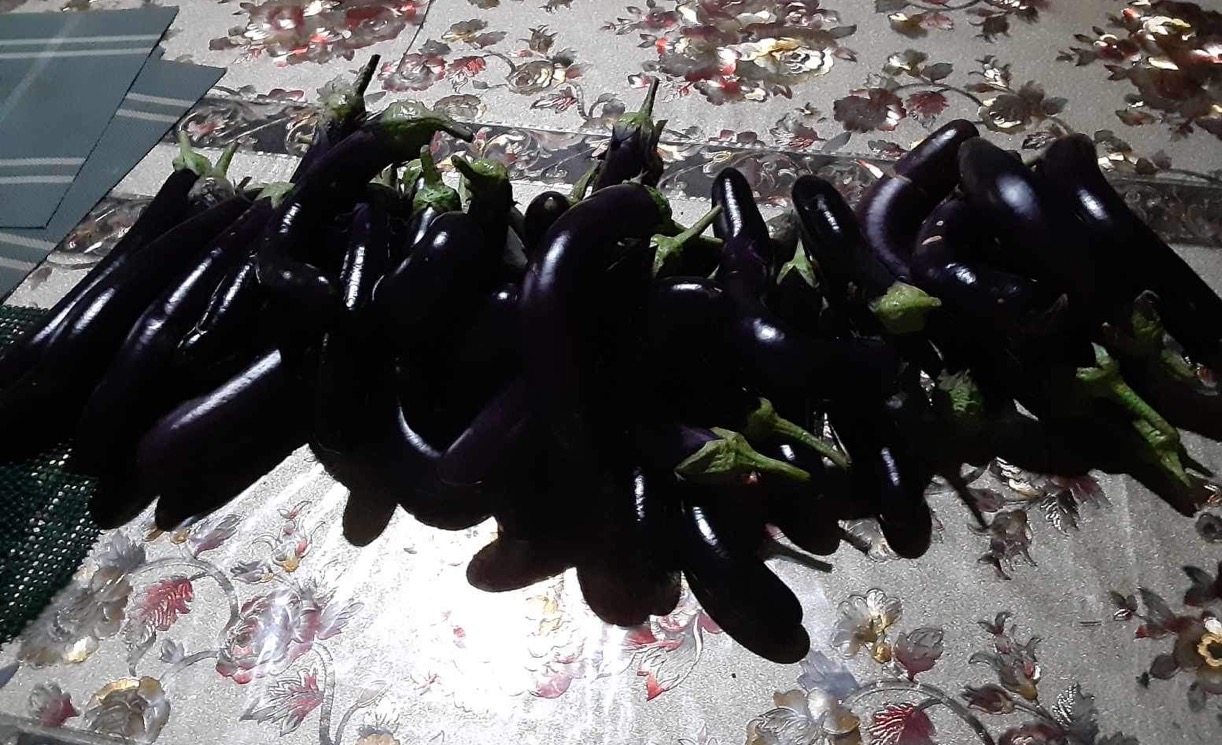
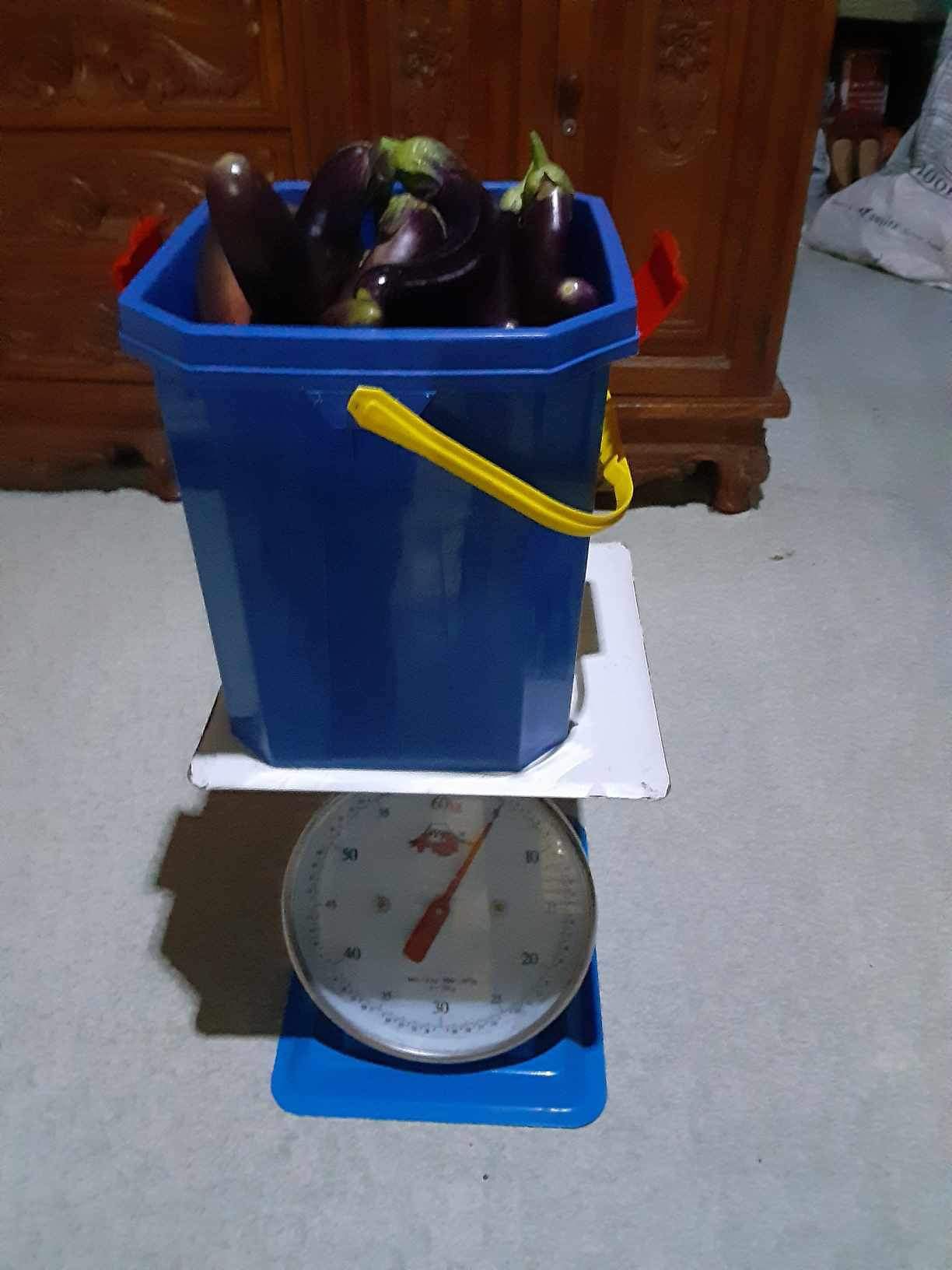
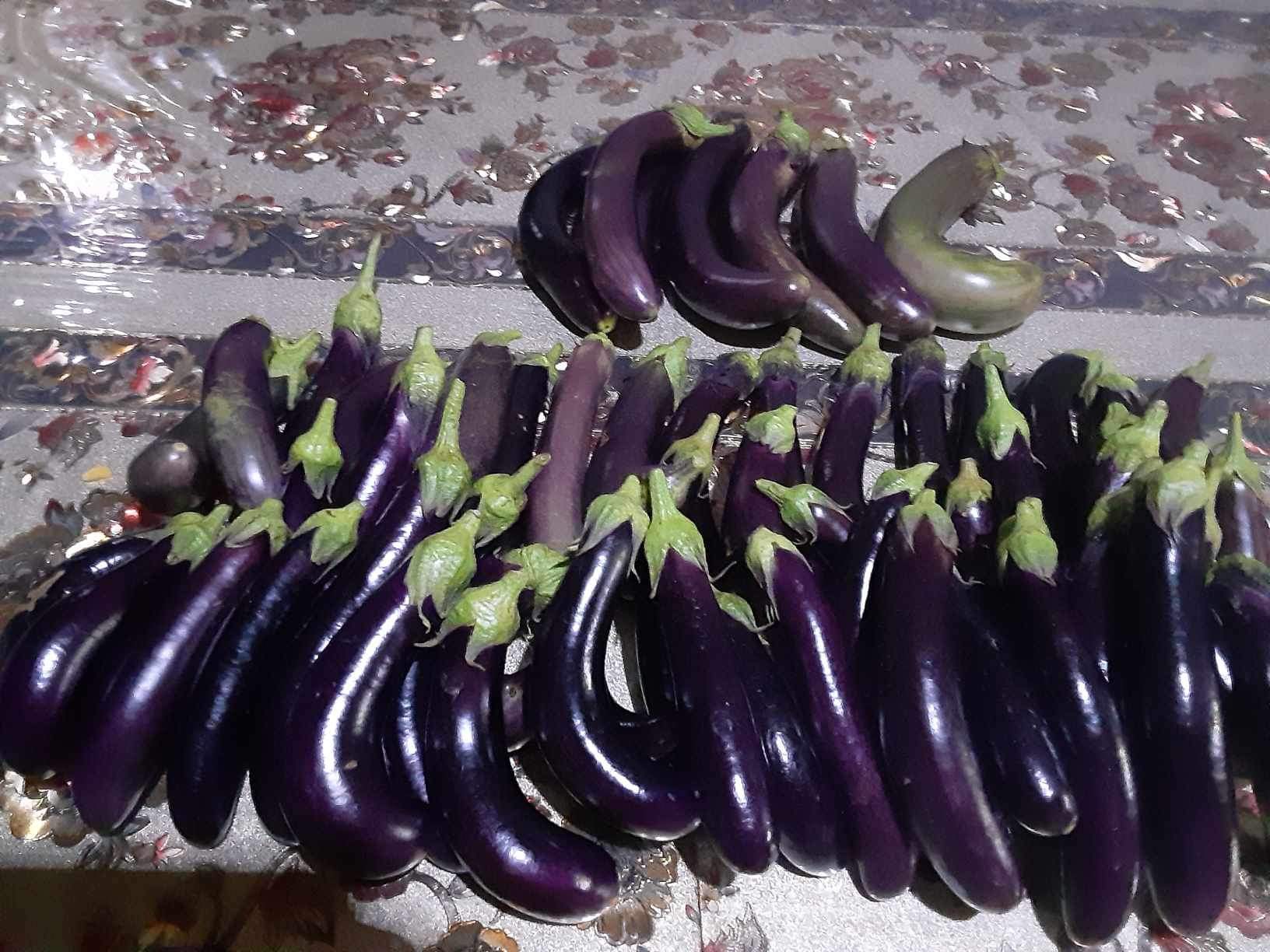
Harvest. Harvested 7 kilos of eggplants. While tomatoes already have flowers or small green fruits, the eggplants have already given them 7 kilos of harvest. Okra and other vine vegetables are still growing, but no flowers or fruit yet.
Pollinator plots. They had started germinating seeds for this although some flowers are already there like marigolds and zinnias. In fact, they report seeing butterflies for the first time although bees had been there for a while.
Companion plants and herbs. These are delayed as they did not realize the importance of these companion plants to prevent pests and harmful insect control. They continue to plant marigolds, citronella, and lemon grass. These last two are also herbs, and with their herbs, they are planting blue ternate flowers, although they have run out of seeds for these and have requested me to send them some from Thailand. I have sent them seeds for rosemary, basil, and chamomile, but they have not germinated nor planted any of them yet. Marigolds, citronella, and lemon grass are known to help control bugs, pests, mosquitoes, flies, etc. They seem to work as we have fewer pests flying around, but because of the number of vegetable plots that have been made, we need to plant some more.
Lemon grass is used as a spice for cooking and is especially good to put in the cavities of roasted fowl and lechon pig. It is also used for boiled chicken soup, etc.
Citronella grass can be cut into short pieces and cooked with coconut oil or olive oil and can be used to protect the body from mosquito and other small insect bites.
Proof of land turning fertile through organic methods. This is a 25-hectare farm, of which only 5 hectares had been used for rice planting before. Our Mabuhay Agritech Ministry is only using about a hectare for our projects.
But until 5 years ago, the tenants who leased the rice land had been using heavy chemical fertilizers. The land had declined since, and it was only about 4 years ago that I personally took over management and forbade anything but organic practices. The rice field is in a natural depression about 15 feet lower than the hills that are on each side. It is fed by rainwater from upstream during the rainy season. The whole area, including all the farms upstream, has used heavy chemical fertilizers and pesticides in the past. This has not only lowered their harvest yield through the years but also the waterspouts that we used to have in the fields disappeared. My father used to tell me they had catfish, mudfish, and other small fish that they fished out of the wet rice fields. These had disappeared since also. However, our farmhands now report that they were able to catch catfish and mudfish again when the fields were full of rainwater.
To purify the water in the fields, we planted tibbig trees on the banks. This is a ficus variety that when mature has fruits come out from the trunk. We planted them along the edges of the rice land. They are still not mature, but their job is to purify the water supply, and their roots go down deep into the water table to help bring clean water up. We have planted these near our wells, but also along all the depressions where water could flow. During the war, wandering soldiers would identify this tree and cut its branches for their water supply in the fields. A cut branch will gush clean water like a faucet does. Anyway, this week, the farmers reported that they saw catfish, mudfish, and other small fish, and have even successfully caught some for food. This is the first time this has happened in the last 5 years.
This is our ninth-week progress report. All our student participants in this program are very appreciative of the financial assistance from Westminster, and all the incidental technical assistance and research information that has come from this endeavor. We are very proud of their achievements and increased knowledge. We are changing lives.
Very sincerely yours,
(Sgd) Zonia Velasco
Mabuhay Fellowship

 Mabuhay Fellowship